1
Instructions For Use
Doc:
Date:
Rev:
XF205instructions
11-jan-2012
1
Instructions For Use – XerumFree™ XF205 Medium Supplement
2.3 Primary Cultures
ABSENCE OF ENZYME INHIBITORS FROM SERUM
Dissociation enzyme
There are essentially two ways to start a primary culture: by outgrowth from a primary explant or by enzymatic disaggregation.
In the latter method the starting tissue is digested by using proteolytic enzymes or cocktails of enzymes, such as dispase,
collagenase and trypsin.
Care must be taken to neutralize / deactivate any remaining proteolytic activity before seeding the cells. This point must be
addressed in particular when trypsin is employed.
The use of standard trypsin preparations can become problematic in the absence of serum, which contains trypsin inhibitors. In
serum-deprived conditions the tryptic activity must be inactivated after the cell dissociation process, this can be achieved by using
an efficient trypsin inhibitor, such as a soybean trypsin inhibitor.
As an alternative to trypsin, the use of AccutaseTM is highly recommended because it does not need to be de-activated. This
recombinant non-mammalian enzyme has been efficiently used for a series of primary cultures, including primary smooth muscle
cells, primary human endothelial cells, primary chick neuronal cells.
ABSENCE OF BINDING BY SERUM PROTEINS
Use of Antibiotics
Antibiotics like many other compounds bind to the plasma proteins of serum, in particular to the albumin fraction. Thus, the same
concentration of antibiotics will exhibit a much higher biological activity in serum- and albumin-free conditions and this increased
activity may have deleterious impacts on cell growth. This is particularly the case for streptomycin which is known to interfere at the
level of protein synthesis in mammalian cells.
In case ‘antibiotic-free culture’ is deemed unworkable, the use of gentamycin is suggested at the concentration of 50 mg/l.
2.3.2. Celltype-specific recommendations
Primary cell cultures have different cell culture requirements, depending on their tissue of origin.
In this booklet we will not detail the primary cell culture procedures that differ vastly from one cell type to the other. As a general
rule we recommend to apply the ‘conventional’ techniques for the isolation of the primary cells of the desired type and REPLACE
the serum contribution by adding 5x lower concentration of XerumFreeTM.
This will satisfy the nutritional requirements of most, if not all cell types. Indeed, in the realm of mammalian cell cultures, nutritional requirements vary only slightly quality-wise, more demanding cell types, such as hepatocytes requiring higher nutrient concentrations.
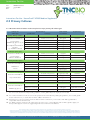
The growth factor and hormone requirements however differ between cell types. The following table lists the cell culture media
preparations that we recommend when XerumFreeTM is used as a replacement for animal serum.
The growth factor and hormonal additions are those indicated for optimal cellular development and proliferation with respect to
each of the four indicated cell types.
The information provided on this Instruction for Use was acquired by diligent search and/or investigation and the recommendations are based on cautious application of professional judgment. The information given is designed only as a guide for
handling, use, and processing and is not to be considered as a warranty or quality specification. All materials and mixtures may present unknown hazards and should be used with caution.
The information relates only to the specific material designated and may not be valid for such material used in combination with any other material or in any process, unless specified in the text.
THE INFORMATION IN THESE INSTRUCTIONS FOR USE DO NOT CONSTITUTE A WARRANTY, EXPRESS OR IMPLIED, INCLUDING ANY IMPLIED WARRANTY OF MERCHANTABILITY OR FITNESS FOR ANY PARTICULAR PURPOSE.
TNC BIO BV | Smalle Haven 95 | 5611 EH Eindhoven | The Netherlands | T +31 4030 400 80 | [email protected] | www.tncbio.com
10