1
Multimedia Information Retrieval
Chapter 7 – User Testing
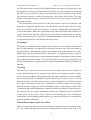
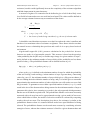
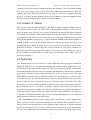
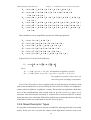
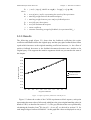
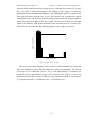
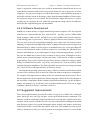
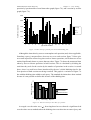
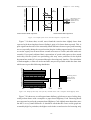
the user to easily see plateaus in the retrieval scores and to rate documents relative to one
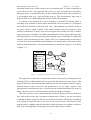
another. Figure 7.33 shows an example of such a header.
Retrieval Node 1
Road user on foot
General
6
Road user on wheels
Motorways - General
145
Road user on wheels
Motorways - Stopping…
173
Road user on wheels
Driving Along - Waiting … 115
Road user on wheels
Motorways - Breakdowns 164
Road user on foot
Crossing the road
7
Figure 7.33 Example retrieval node with score graph
The area given to displaying the scores may prove too small to adequately represent the
score. It may be desirable to present the scores relative to the first matched query. In this
case the absolute score of the best matched node may be presented separately within the
retrieval node. The absolute score of the best match could be presented as an estimate of
the quality of the retrieval, and as such, may be presented by various textual bands rather
than a less understandable percentage. Example bands could be: very poor, poor,
reasonable, good, very good, and excellent. The textual bands also allow the retrieval
engine to give meaningful feedback on the performance of the system over various
document bases, e.g. excellent may vary between over 50% and over 95% depending on
the document base and absolute scoring method.
7.8.3 Provision of Maps
The provision of maps, to help users understand their position in the document base, may
be severely affected by the existence of a matched node list. This list will typically contain
nodes from many different locations, within the hypermedia network, resulting in a wider
spread of links than commonly found in hypermedia document bases, and in a reduction
of the help provided by maps. If the users’ searches were based around an explicit
matched document list (e.g. by the provision of retrieval nodes), the requirement for maps,
and navigation aids in general, would diminish. The nodes in the document base which are
relevant to the user should not be very distant from the matched document list. Thus the
chances of users getting lost are reduced because they should never have to browse far
from this list. If they do get lost they can also easily return to the list and resume their
search from there. Akscyn, McCracken, and Yoder (1988) suggest that, for hypermedia
systems, the provision of fast node access and a fast history command significantly
reduces the navigation problems, and almost eliminates the requirement for other
navigation aids. This suggestion may be even more applicable when considering access via
the hybrid of querying and browsing suggested here.
136