1
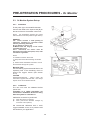
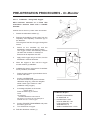
WARNINGS AND CAUTIONS - Oxygen Monitor
Oxygen Monitor
NOTES
WARNINGS
1.
We recommend calibration of the
oxygen monitor every time the system
is turned on, as a safety precaution.
2.
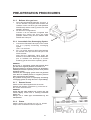
Do not attempt to open the fuel cell.
The sensor contains small quantities
of :
a) electrolyte, classified as a harmful
irritant which is potentially hazardous,
and
b) lead.
Used or defective cells must be
disposed of according to hospital,
local, state, and federal regulations.
3.
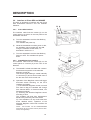
ALWAYS check the integrity of the
sensor assembly before use.
4.
Once exhausted, the sensor must be
disposed of according to hospital,
local, state and federal regulations.
5.
The sensor measures oxygen partial
pressure, and its output will rise and
fall due to pressure change.
An increase in pressure of 10% at the
sensor inlet will produce a 10%
increase in sensor output.
CAUTIONS
1.
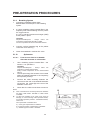
Only use low temperature ethylene oxide
sterilisation for the oxygen sensor.
The sensor is not compatible with other
sterilisation techniques - damage may
result.
Do not sterilise any other components.
2.
Do not autoclave or expose the sensor to
high temperatures.
3.
If the sensor shows signs of being affected
by condensation, dry the sensor with soft
tissue.
Do not use heat to dry the sensor.
6
1.
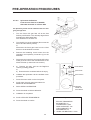
The O2 SENSOR FAULT alarm indicates
that one of the following conditions has
occurred.
a) Internal electrical fault
b) Software/electronics fault
c) Oxygen sensor fault.
2.
The concentration read-out may, in
certain conditions of excess pressure,
show a value above 100%.
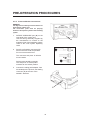
To accommodate these conditions it is
possible to set the high alarm value up to
105% (see section 5).
3.
To maintain maximum sensor life:
i) always switch off the anaesthetic
machine after use, to ensure that the basal
flow ceases.
ii) disconnect the breathing circuit after
use.
4.
The accuracy of flow and volume
measurements may be reduced if the
oxygen monitor is not in use.
5.
Fresh gas mixture compensation is disabled
if the oxygen monitor is switched OFF.