1
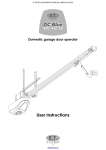
To open or close the door manually. Release the door from the operator: While pulling down on the emergency release cord start moving the door with your other hand. Release the cord. The lever attached to the cord will spring back and you can continue moving the door manually If at any point, the door re-engages or positive locks repeat the first step above. To re-engage the door: Press the door control button. The drive will collect the door (you will hear a click as the traveler/sledge re-engages) If the door does not re-engage by the time the motor stops running, re-trigger the unit and allow it to collect the door in the other direction. You can also move the door gently by hand until you feel and hear it click back on to the drive system. Once engaged, you can continue to use the automation normally. To secure your door when the drive system is still in the open position and the power is off: To lock: While in manual mode as above, move the door fully closed until you feel it lock into place. To un-lock: Trigger the unit with the door control button. It will run and collect the door for normal operation. If the power has not returned by the time you want to open the door, pull the release cord and move the door. Understanding the automatic obstruction-sensing feature. Your garage door operator has an automatic safety feature built in, obstruction sensing. Knowing and understanding how this feature works will help you maintain a safe and working automation system. This feature monitors for any excessive physical resistance to the door while moving. Most often this resistance is caused by badly maintained or un-balance doors. An untreated wooden door will travel differently in the rainy season as it soaks up water and becomes heavier. Extreme weather conditions can also be a cause of excessive physical resistance. A fiberglass door in a storm for instance. The obstruction sensing primarily designed into your unit as a safety feature, (A door closing onto a motor vehicle) also protects the unit from internal damage. Please test for the following on a regular basis or have your service provider do the tests. Your door when sensing an obstruction; On opening should stop and wait for the next door-control trigger to reverse. On closing should stop and reverse to the open position. (For your safety, use a brick or milk crate to test this.) 3