1
Controlling the Analyzer : THD+N (Total Harmonic Distortion plus Noise)
Operation
Understanding THD+N
Total Harmonic Distortion plus Noise, or THD+N, is one of the most common and
widely used measurements made on audio devices. Virtually every type of device
used to produce, transmit, or process audio signals has a THD+N specification.
Fundamentally, THD+N is a measurement of sound that is not supposed to be
there. If your device is creating a sound, you want it to create that sound and
nothing else. However, all devices create other sounds as well.
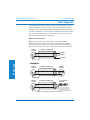
The unwanted sounds break down into four basic categories:
Harmonic distortion is caused by slight imperfections in the creation or recreation of
the sound. These imperfections generally cause unwanted sounds to be generated at
whole-number frequency multiples of the desired sound.
Random noise is created by almost every type of electronic component. Noise
sounds generally sound like ‘ffff...’ and are generated regardless of whether there is a
desired sound being created or not. Some noise exists at every frequency.
Hum is created by the main supply voltage leaking into the audio signal. It exists at
the frequency of the supply voltage and whole-number multiples of this frequency.
Interference is caused by other signals leaking into the sound signal. Crosstalk is a
certain type of interference caused by sound leaking in from other audio channels
within the device.
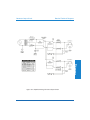
The THD+N measurement includes all four types of unwanted sound. If any of
these are excessive, it will be noticeable in a THD+N reading. In this way, a single
THD+N reading can be a good indication that a device is operating properly.
The THD+N reading alone does not tell you which type of unwanted sound is
dominant. If the reading is unexpectedly high, you may need further testing to
determine the source of the unwanted sound. More detail on determining which
type of unwanted sound is causing the problem is given in the section ‘Isolating
Sources of THD+N’ on page 4-37.
Portable One Plus Access User's Manual
4-29
4 Operation
. Harmonic Distortion - unwanted sound that is related to the desired sound.
. Random Noise - unwanted sound caused by random fluctuations in
electronic components.
. Interference - unwanted sound related to other signals within the device or
environment.
. Hum - unwanted sound related to the frequency of the main supply voltage.