1
Banshee® Tube Spinner (BN9.5, BN13, BN18, BN24, BN33)
SAPATENTS.COM
Safe Practices for Operation and Maintenance of Banshee® Tools
This information is critical to ensure safe operation of the tool and to achieve maximum tool operational life. Tool
life can vary based on the type and frequency of cleaning operations, but improper maintenance can significantly
degrade the usable life of a tool. Most Banshee tool issues occurring within the expected reliable lifetime of the
Banshee result from users not adhering to the following recommended procedures.
Attention! Use the Right Tool for the Job
Use a correctly sized open end wrench to fit flats provided on the Inlet Nut when attaching tool to lance. Do not use
Pipe Wrench or Pliers with teeth as this can crush and/or crack the hardened steel body, leading to tool breakage in
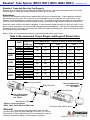
operation. Recommended torque ranges and proper wrench sizes for tightening the heads to Banshee shafts are
shown in Table 3. All standard open end wrenches are available from StoneAge. Preset torque wrenches for Head
installation are also available from StoneAge.
Pressure Dump
The pressure dump mechanism is the most important safety device when flex lancing. The operator nearest the
nozzle should have control of the dump valve. If using multiple operators, each must have his own dump valve.
Hose
The high pressure hose should be as large as possible to minimize the pressure loss through the hose. Hose should
be inspected for excessive wear or damage prior to use. The high pressure hose and end fitting should be no larger
than the tool to be used on the end of it. There is an increased risk of hydraulic-ing when cleaning plugged tubes,
when using larger ends.
Stinger
A stinger is a rigid piece of pipe or tubing used between the end of the hose and the nozzle. It is typically 2 feet in
length and is primarily a safety device for hand flex lancing. When using stingers, the operator should be trained not
to use it as a pry-bar or to bang on the deposit, particularly with rotating tube nozzles. They may break or stop
rotating while being forced against the deposit. The coupling connecting the hose to the stinger should be of the
slim-line type and no larger in diameter than the nozzle body; a larger coupling diameter increases the chances of
material catching on the coupling and causing hydraulic-ing to occur.
Anti-Withdrawal Device
An anti-withdrawal device should be used when flex lancing. These devices provide a mechanical stop to prevent
the waterjet tool from exiting the tube and injuring the operator during cleaning operations.
Operation
We recommend that the entire system be flushed out before installing the Banshee on the end of the hose or
stinger. The swivels require a clean water supply for reliable operation; filtration of 25 micron or better is
recommended. Once the system is flushed, attach the Banshee and place it in an open tube while the operating
pressure is being set. When the tool is at operating pressure, the water exiting the tool through the leak paths will
keep external debris from entering the tool. If the tool is not under pressure, it should not be left inside a plugged
tube. Doing so could allow debris to enter and prevent rotation or cause damage to the tool. If the tool does not
rotate when the dump valve is closed, the operator should try closing the dump valve slowly a few times to build up
pressure slowly until normal operation is achieved. This also flushes debris out of the tool.
The drilled nozzle head will last between 20 and 60 hours. Worn jets decrease the cutting rate. The tool may begin
to hydraulic when cleaning plugged tubes. This occurs if the the jets are not effectively cutting the material into
smaller pieces. When using rotating nozzles in plugged tubes, do not jam the head into the deposit because this
will stop the rotation of the tool and impede the cutting ability. When the tool contacts the deposit, allow it to cut
away the material and advance at its own rate. If it stops advancing, pull back slightly on the hose to move the head
away from the deposit. This action also allows the jets to cut the deposit at different angles. The hose should be
gradually fed into and out of the tube, allowing time for the jets to do their work. Repeat this process until the tube is
unplugged.
When polishing tubes with scale, the tool has been observed passing through a 50 foot long scaled tube in 10
seconds. While this is sufficient when cleaning easy-to-remove deposits, we recommend feeding the tool through
the tube at a slower rate. This will ensure adequate cleaning. Unless the deposit is very easy to remove, this will
not completely remove the scale.
© 05/03/2013 StoneAge ®, All Rights Reserved