1
Introduction
Welcome to TerraQSAR™, a breakthrough development in toxicity estimation
software, developed by TerraBase Inc.
TerraQSAR prediction software is based on the probabilistic neural network
methodology using the molecular structure of the substances under investigation. The
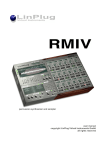
TerraQSAR - RMIV program computes the intravenous lethal dose of organic
compounds to 50% of a population (iv. LD50) of the rat (Rattus norwegicus) or mouse
(Mus musculus).
TerraQSAR modules use as input a chemical’s SMILES code (2-D or 3-D), which is an
international code for the representation of chemical structures and amenable to computer
analysis.
The TerraQSAR - RMIV module computes the LD50 in both mg/kg and pT (log [kg
body weight]/mmole) units, as well as the molecular weight (MW) of substances entered.
Theory
The field of artificial intelligence and neural network application is experiencing
rapid growth in all aspects of technology. From elevator control to drug design, neural
network methods have lots to contribute to product development, operating
improvements, and frequently enable the customer to tackle problems, which were
inaccessible hitherto.
The TerraQSAR products exploit the neural network methodologies developed in recent
years by researchers and programmers both within and outside the company. In contrast
to linear methodologies, such as simple regression methods, principal components
analysis and others, neural networks make use of non-linear relationships, which makes
them particularly useful for chemical/biological problems where different and/or
unknown modes of action are known or likely to be present, in addition to linear
relationships.
Important information on both the theory and specific aspects of this software can be
found in the references given in the Literature.
Computation Process
Data Set
The TerraQSAR - RMIV rat / mouse LD50 toxicity estimation program is based
on a data set of measured values for over 6000 organic (carbon-containing) compounds.
These data are widely available, both from non-commercial sources, such as the US
National Institute of Health’s database, or from commercial sources, such as TerraBase
Inc.’s TerraTox™ - Explorer database.
2