1
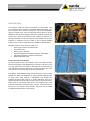
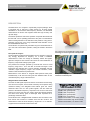
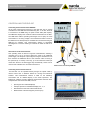
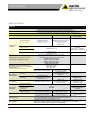
APPLICATION Low frequency fields are present throughout our environment. They occur wherever electrical energy is generated, distributed or used. Thus, they are present in our homes, our places of work, in medical facilities, and even outside in the open air where high-tension cables for energy distribution may be found. Magnetic fields occur primarily wherever high currents flow; electric fields wherever high voltages are present. It is virtually impossible to avoid their influence, which makes it all the more important to understand how they affect us and to prevent possible interactions by means of measurement and suitable countermeasures. Fields occur when electrical energy is generated Examples of places where strong LF fields occur: Power supply stations and transformers High-tension lines Electric motors, railroads Industrial equipment for welding, tempering, and smelting Galvanizing equipment, chlorine manufacturing Medical technology, MRT Fixed limit values for protection To protect people at work, the European Union has issued the EMF Directive 2013/35/EU. This obligates every company in the EU to carry out a risk assessment with regard to field exposure for every place of work. Mandatory minimum limit values for fields have been set, which come into force and must be met by mid-2016 at the latest. … where electrical energy is distributed International standardization bodies and organizations such as WHO, ICNIRP, IEC, IEEE, and CENELEC, as well as national authorities have for many years been working on establishing and updating the immission protection limit values or on product standards. There is no dispute about the short-term effects of high frequency and low frequency fields. Limits for the general public and in the workplace are in force practically everywhere around the world. However, such limit values on their own are not enough to protect people. They must also be verified by calibrated measurement to make certain. … and where electrical energy is used NSTS 0115-E0310B 2/7 Subject to change without notice