1
1.1. WIRELESS COOPERATIVE PROTOCOLS
protocols. In the end of this chapter the scope of this project is defined based on this
initiating problem.
1.1
Wireless Cooperative Protocols
Cooperative communication in wireless networks exploit some of the features of the
wireless medium to optimise communication within the network, either by increasing
the overall throughput in the network, or by increasing reliability [11].
Path 2
Path 2
Path 1
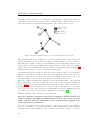
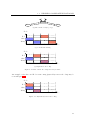
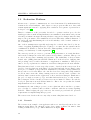
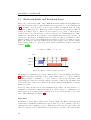
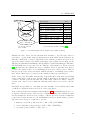
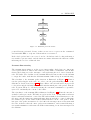
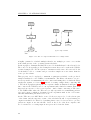
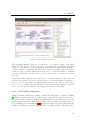
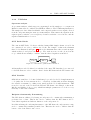
Figure 1.2: Cooperative communication using multipath routing.
One of the important features of a wireless network is that the medium is shared
and that all transmissions are inherently broadcasted. This feature is exploited for
cooperative communication as illustrated in Figure 1.2. Here the red node transmits
a message to the green node using path 1. This transmission is overheard by the blue
node, who forwards the overheard transmission to the green node using path 2. The
green node now has received the same data using two paths, or channels, which it may
use to achieve a greater reliability of the received data [14].
In a network based on relaying, as described in the previous section, the cooperate
technique of network coding may increase the throughput across the network. This
technique is elaborated upon in the following section.
1.1.1
Network Coding
In conventional network routing, a node receives a packet, checks the destination of the
packet, and forwards the packet through the correct channel. In this type of routing
problems may occur, if many packets have to be routed through a single node, e.g.
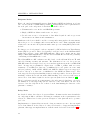
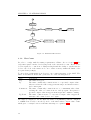
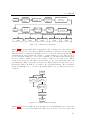
a relay node. This node becomes a bottleneck in the network, an example of this is
illustrated in Figure 1.3. Figure 1.3a depicts two clusters of interconnected nodes. The
clusters are connected to each other through a single link between two nodes, which
forms the bottleneck nodes. Figure 1.3b is an example of a simple relay scenario with
two endpoint nodes and a relay node that interconnects the two endpoint nodes. The
relay node is a bottleneck in the network.
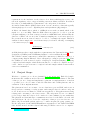
In order to improve the throughput at the relay nodes of a network, network coding
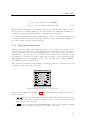
may be used. An example of network coding may be seen in Figure 1.4, where two
nodes (Alice and Bob) communicates through a relay node. With conventional routing,
11