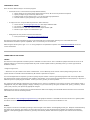
1
TIME
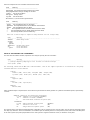
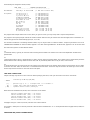
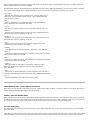
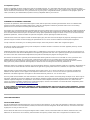
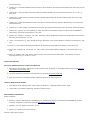
One output line for each step. The line begins with a 'b' if the date is BC, a blank (" ") if AD. This is followed by the date and time, which
is either UT or TT, in calendar or JD format (or both), depending on user defaults.
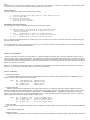
SOLAR PRESENCE
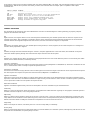
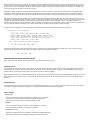
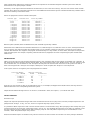
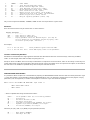
Time tag is followed by a blank, then a solar-presence symbol:
'*'
'C'
'N'
'A'
' '
Daylight (refracted solar upper-limb on or above apparent horizon)
Civil twilight/dawn
Nautical twilight/dawn
Astronomical twilight/dawn
Night OR geocentric ephemeris
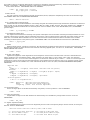
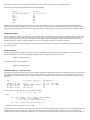
INTERFERING BODYLUNAR PRESENCE
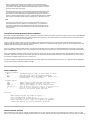
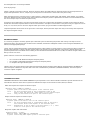
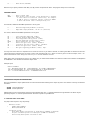
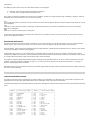
The solar presence symbol is immediately followed by another marker symbol:
'm'
' '
'r'
't'
's'
Refracted upper-limb of
Refracted upper-limb of
geocentric ephemeris
Rise
(target body on
Transit (target body at
Set
(target body on
Moon/IB on or above apparent horizon
Moon/IB below apparent horizon OR
or above cut-off RTS elevation)
or past local maximum RTS elevation)
or below cut-off RTS elevation)
The 'rts' codes will be displayed under two conditions only: if the print interval is less than or equal to 30 minutes or the RTS-only print
option has been selected.
For non-Earth observing sites, no twilight/dawn codes (C, N, or A) are output, refraction is not modelled and the interfering body marker
is 'x' instead of the 'm' reserved for Earth's Moon.
STATISTICAL UNCERTAINTIES
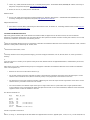
Output for asteroids and comets can include formal +/- 3-standard-deviation statistical orbit uncertainty quantities. There is a 99.7%
chance the actual value is within given bounds. These statistical calculations assume observational data errors are random. If there are
systematic biases (such as timing, reduction or star-catalog errors), results can be optimistic. Because the epoch covariance is mapped
using linearized variational partial derivatives, results can also be optimistic for times far from the solution epoch, particularly for objects
having close planetary encounters.
NOTE: "n.a." is output if a requested quantity is not available for selected object. For example, azimuth and elevation for a geocentric
ephemeris, or uncertainties for an object with no covariance in the database.
SPECIFIC QUANTITIES
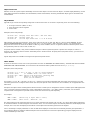
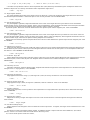
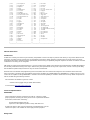
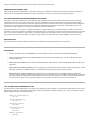
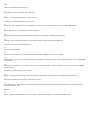
1. Astrometric RA & DEC:
Corrected for light-time only. With respect to the Earth mean equator and equniox of the reference Epoch. If FK4/B1950.0 frame
output is selected, elliptic aberration terms are added.
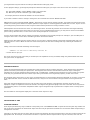
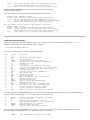
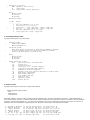
Labels:
R.A._(ICRF/J2000.0)_DEC
R.A._( FK4/B1950.0)_DEC
R.A._(J2000.0)_DEC.
R.A._(B1950.0)_DEC.
(HMS/DMS format)
(HMS/DMS format)
(degree format)
(degree format)
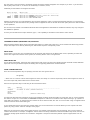
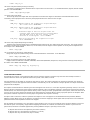
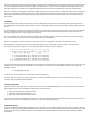
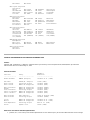
2. Apparent RA & DEC:
Apparent right ascension and declination of the target with respect to the center/site body's true-equator and Earth equinox ofdate. For non-Earth sites with rotational models, the origin of RA is the meridian containing the Earth equinox of J2000.0. For non-Earth
sites without rotational models, RA and DEC are with respect to the REFERENCE FRAME
(FK4/B1950 or ICRF/J2000.0) coordinate
system. Corrected for light-time, the gravitational deflection of light, stellar aberration, precession and nutation. There is an optional
(approximate) correction for atmospheric refraction (Earth only).
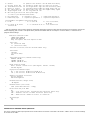
Labels:
R.A._(a-apparent)__DEC.
R.A._(r-apparent)__DEC.
R.A._(a-appar)_DEC.
R.A._(r-appar)_DEC.
(airless, HMS/DMS format)
(refracted, HMS/DMS format)
(airless, degrees format)
(refracted, degrees format)
3. Rates; RA & DEC
The rate of change of apparent RA and DEC (airless). d(RA)/dt is multiplied by the cosine of declination. Units are ARCSECONDS PER
HOUR.
Labels: dRA*cosD d(DEC)/dt
4. Apparent AZ & EL:
Apparent azimuth and elevation of target. Corrected for light-time, the gravitational deflection of light, stellar aberration, precession