1
TD 92314GB
Function Description
Ascom VoWiFi System
13 December 2010 / Ver. E
Function Description
Ascom VoWiFi System
TD 92314GB
Contents
1 Introduction .................................................................................................................... 1
1.1 Abbreviations and Glossary................................................................................................... 1
2 Technical Solution .......................................................................................................... 3
2.1 Connection to IP-PBX............................................................................................................... 3
2.2 Connection to Traditional Telephony System with the VoIP Gateway ....................... 4
2.3 Ascom VoWiFi Handsets......................................................................................................... 4
2.3.1 Ascom i62 VoWiFi Handset ......................................................................................... 4
2.3.2 Ascom i75 VoWiFi Handset ......................................................................................... 4
2.4 Portable Device Manager Windows Version (WinPDM) ................................................. 5
2.5 IMS2............................................................................................................................................. 5
2.6 Unite CM ..................................................................................................................................... 5
2.7 VoIP Gateway/Gatekeeper..................................................................................................... 5
2.8 WLAN/LAN ................................................................................................................................. 6
3 Functions in Ascom VoWiFi Handsets .......................................................................... 7
3.1 Voice Functions ......................................................................................................................... 7
3.1.1 Two-Party Call ................................................................................................................. 8
3.1.2 In Call Menu...................................................................................................................... 8
3.1.3 Push-To-Talk (PTT) Group Call .................................................................................... 8
3.1.4 Supplementary Services ............................................................................................... 9
3.2 Messaging Functions............................................................................................................ 10
3.2.1 Interactive Messaging................................................................................................ 10
3.2.2 Group Messaging......................................................................................................... 11
3.2.3 Availability Information/Absence........................................................................... 11
3.2.4 Coloured Messaging (i62 VoWiFi handsets) ........................................................ 11
3.3 Mobile Data............................................................................................................................. 11
3.4 Alarm Handling ...................................................................................................................... 11
3.4.1 Push-Button Alarm ..................................................................................................... 11
3.4.2 No-Movement Alarm (i75 VoWiFi handsets) ...................................................... 12
3.4.3 Man-Down Alarm (i75 VoWiFi handsets)............................................................. 12
3.4.4 Alarm with Predefined Data..................................................................................... 12
3.4.5 Automatic Call after Alarm ....................................................................................... 12
3.4.6 Automatic Alarm after Emergency Call ................................................................. 12
3.4.7 Acoustic Location Signal............................................................................................ 12
3.4.8 Location of the VoWiFi Handset.............................................................................. 12
3.5 Presence Management ........................................................................................................ 13
4 System Functions in Ascom VoWiFi Handsets........................................................... 14
4.1 Mobility .................................................................................................................................... 14
4.2 Channel Load Reduction ...................................................................................................... 14
13 December 2010 / Ver. E
Function Description
Ascom VoWiFi System
TD 92314GB
4.3 Power Save ............................................................................................................................. 14
4.4 Shared Phones ....................................................................................................................... 15
4.5 Licensing.................................................................................................................................. 15
4.5.1 Ascom i62 VoWiFi Handsets .................................................................................... 15
4.5.2 Ascom i75 VoWiFi Handsets .................................................................................... 15
5 Related Documents ...................................................................................................... 16
6 Document History ........................................................................................................ 17
13 December 2010 / Ver. E
Function Description
Ascom VoWiFi System
1
TD 92314GB
Introduction
The Ascom Voice over Wireless Fidelity (VoWiFi) system provides wireless IP telephony,
messaging and alarm functions to enterprise LANs. The VoWiFi system can also interact with
Unite and other systems. This document gives a brief description of the functions provided
by the VoWiFi system.
1.1
Abbreviations and Glossary
AP
Access Point:
a radio transceiver providing LAN connection to wireless devices.
BAM
Basic Alarm Manager:
a tool in the IMS2/Unite CM that can be used to handle triggered inputs
and alarms and user data from handsets.
ESS§
Enhanced System Service:
Unite modules that handle centralised number planning, remote
connection, system supervision, fault handling, group handling,
message routing, centralised logging, activity logging, and user access
administration.
ESSID
Extended Service Set Identifier:
an alphanumeric string of maximum 32 characters. This string is used
as an identifier for the WLAN system.
H.323
a set of protocols that enable multimedia communication such as voice
and video calls over packet-based networks that do not provide a
guaranteed QoS.
IMS2
Integrated Wireless Messaging and Services:
a Unite module that enables wireless services to and from the VoWiFi
handsets in a WLAN system. It also includes the Device Manager.
IP
Internet Protocol:
global standard that specifies the format of packets, and the
addressing scheme.
PBX
Private Branch Exchange:
telephone system within an enterprise.
PTT
Push-To-Talk
RADIUS
Remote Authentication Dial-In User Service:
a standard protocol for authentication servers.
SIP
Session Initiation Protocol:
a signalling protocol for controlling multimedia communication
sessions such as voice and video calls over IP.
TCP
Transmission Control Protocol:
standard IP protocol that enables two hosts to establish a connection
and exchange streams of data with guarantee of data delivery and
that data packets will be delivered in the same order that they were
sent.
Unite
Ascom messaging platform. A generic term for a messaging system
that unites different systems, for example System 900, System 9d, and
VoWiFi.
Unite CM
Unite Connectivity Manager:
a Unite module that enables messaging and alarm handling in a WLAN
system. It also includes the Device Manager.
13 December 2010 / Ver. E
1
Function Description
Ascom VoWiFi System
TD 92314GB
UNS
Unite Name Server:
Unite module component that holds the Unite number plan and Unite
destinations.
WinPDM
Portable Device Manager Windows Version:
a software application for initial configuration of the VoWiFi handsets.
WLAN
Wireless Local Area Network
13 December 2010 / Ver. E
2
Function Description
Ascom VoWiFi System
2
TD 92314GB
Technical Solution
The Ascom VoWiFi system is built by Ascom-developed hardware and software as well as
third-party products. For more information on WLAN/LAN built by third-party products, see
2.8 WLAN/LAN on page 6.
The following components are developed by Ascom and provides voice, messaging and
alarm functions to a WLAN:
•
•
•
•
•
•
VoWiFi handset
Portable Device Manager Windows Version (WinPDM)
Integrated Wireless Messaging and Services (IMS2)
Unite Connectivity Manager (Unite CM)
VoIP Gateway (converter between traditional telephony and VoIP)
Chargers and Accessories
Messages and alarms can be sent between the VoWiFi system and other Ascom messaging
systems via the IMS2/Unite CM. Communication with traditional telephony systems is
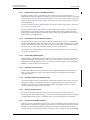
enabled through the VoIP Gateway connected to a PBX. Communication with IP-based
telephony systems is enabled through a SIP Proxy Server in the IP-PBX.
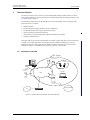
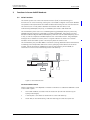
2.1
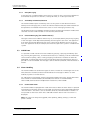
Connection to IP-PBX
Figure 1.
VoWiFi System
Access Points
Messaging
VoWiFi Handsets
Send
Send
Send
Unite
modules
LAN
WinPDM
IMS2/
Unite CM
A-b
us
System 900
PSTN
IP-PBX
Figure 1. System Overview without the VoIP Gateway
13 December 2010 / Ver. E
3
Function Description
Ascom VoWiFi System
2.2
TD 92314GB
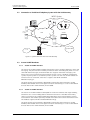
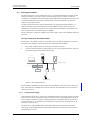
Connection to Traditional Telephony System with the VoIP Gateway
Figure 2.
VoWiFi System
Access Points
Messaging
VoWiFi Handsets
Send
Send
Send
Unite
modules
LAN
WinPDM
IMS2/
Unite CM
VoIP Gateway
PRI
Main PBX
A-b
us
System 900
PSTN
Figure 2. System Overview with the VoIP Gateway
2.3
Ascom VoWiFi Handsets
2.3.1
Ascom i62 VoWiFi Handset
The Ascom i62 VoWiFi handset includes functionality such as wireless telephony, alarm and
messaging. The personal alarm includes push-button alarm and emergency alarm. You can
send and receive messages, and the handset also supports interactive messaging. This
means that you can communicate with external sources such as a building management
system, hospital system or a production process system. You can also use the handset for
remote control of a machine, a door etc. It supports the WLAN standards
IEEE 802.11a/b/g/n.
The programming of the handset is described in the Configuration Manual i62 VoWiFi
Handset, TD 92675GB. How to manage the functions and settings as a user is described in
the User Manual i62 VoWiFi Handset, TD 92599GB.
2.3.2
Ascom i75 VoWiFi Handset
The Ascom i75 VoWiFi handset is developed for harsh environments and rough handling,
and there is also a version designed for the health care sector. It includes functionality
similar to the Ascom i62 VoWiFi handset described above with some exceptions. Alarms
activated from the handset optionally includes man-down alarm and no-movement alarm.
The handset supports WLAN standards IEEE 802.11b/g.
The programming of the handset is described in the Configuration Manual i75 VoWiFi
Handset, TD 92431GB. How to manage the functions and settings as a user is described in
the User Manual i75 VoWiFi Handset, TD 92319GB.
13 December 2010 / Ver. E
4
Function Description
Ascom VoWiFi System
2.4
TD 92314GB
Portable Device Manager Windows Version (WinPDM)
The WinPDM is a management tool for the VoWiFi handsets. It is a software application that
runs on a local Windows PC. It has a Java-based Graphical User Interface (GUI) and a
database containing parameters specific for each of the VoWiFi handsets used in the
system. Examples of parameters are WLAN system parameters, VoIP service parameters,
and Unite service parameters. The WinPDM also enables firmware upgrades.
Before a VoWiFi handset is able to access the WLAN and any services, it must be configured
with WLAN system specific parameters, for example the ESSID. The parameters are
synchronized with the handset via a USB cable connected to a handset cradle (a Desktop
Programmer [DP1] for i62 VoWiFi handsets, or a USB Programming Device for i75 VoWiFi
handsets). Further information can be found in the document Installation and Operation
Manual Portable Device Manager, Windows version, TD 92325GB.
Note: For the Ascom i62 VoWiFi handset it is possible to make the initial configuration
directly on the handset, see Configuration Manual i62 VoWiFi Handset, TD 92675GB.
2.5
IMS2
Integrated Wireless Messaging and Services (IMS2) is a web-based tool used for device
management, messaging and alarm handling. It is based on the ELISE2 hardware.
The handset needs a basic parameter setup with the WinPDM, for example WLAN and IP
settings, to be able to communicate with the IMS2. Thereafter the IMS2 can be used to
remotely edit parameters and update software in the handsets via the air. It saves
parameters and software for all handsets in a database. It also synchronises the local
phonebook. The VoWiFi handset must log on to the IMS2 to enable the messaging and
alarm functions.
For more information on the IMS2, see the document Installation and Operation Manual
IMS2, TD 92586GB.
2.6
Unite CM
Unite Connectivity Manager (Unite CM) is a web-based tool used for device management,
messaging and alarm handling. It is also used for the administration of users and groups, for
supervision, activity logging, and fault logging. It is a Unite module based on the ELISE3
hardware. It can be used independently but also work in combination with other Unite
modules or System 900 modules.
Unite CM can be used to remotely edit parameters and update software in the handsets via
the air in the same way as IMS2. Also, just as for the IMS2, VoWiFi handsets must log on to
the Unite CM to enable the messaging and alarm functions.
For more information on the Unite CM, see the document Installation and Operation Manual
Unite CM, TD 92735GB.
2.7
VoIP Gateway/Gatekeeper
When deploying the VoIP Gateway/Gatekeeper, a number of configuration settings must be
defined, for example, how to set up the PRI interface, or how call routing is to be performed.
Configuration of the VoIP Gateway is described in the document Installation and Operation
Manual VoIP Gateway, TD 92326GB.
13 December 2010 / Ver. E
5
Function Description
Ascom VoWiFi System
2.8
TD 92314GB
WLAN/LAN
There are several vendors providing components needed to deploy a WLAN, such as Access
Points (APs), switches, and routers.
In order to achieve optimal performance for VoWiFi, the following is recommended:
•
Quality of Service (QoS) must be implemented on the wireless (802.11e, WMM, WMM
Power Save) infrastructure. Wireless QoS must be supported by the wired (802.1p)
infrastructure.
• The wireless infrastructure should be connected to a switched network (i.e hubs or
repeaters should be avoided).
For more information on VoWiFi system planning, see the document System Planning
Ascom VoWiFi System, TD 92408GB.
13 December 2010 / Ver. E
6
Function Description
Ascom VoWiFi System
3
TD 92314GB
Functions in Ascom VoWiFi Handsets
3.1
Voice Functions
The VoWiFi system uses Voice over Internet Protocol (VoIP) as the technology for
transmission of voice. The analog voice signal is converted to a digital voice stream divided
into packets and compressed in the VoWiFi handsets before they are sent over the network.
The transmission of voice packets between the handset and an IP-PBX, or the
VoIP Gateway/Gatekeeper/SIP proxy, is handled by the wireless and wired LAN.
The VoIP Gateway from Ascom is a combined gateway/gatekeeper/SIP proxy and is only
needed when the network is connected to a traditional ISDN PBX. The gateway converts
between traditional digital ISDN-based telephony and Voice over IP-based telephony (H.323
or SIP), as well as compresses and decompresses the voice media stream. The gatekeeper
manages the so called H.323 zone, which is a logical collection of all the H.323 VoWiFi
handsets within the VoWiFi system. The SIP proxy does the same for SIP.
The VoIP Gateway also provides address translation (routing) between internal and external
numbering plans and provides admission control, specifying which device can call which
number. See the Installation and Operation Manual VoIP Gateway, TD 92326GB, for
information on how to install and configure the VoIP Gateway.
Figure 3.
IMS2/
Unite CM
WinPDM
RADIUS
Server
IP Backbone / LAN
IP-PBX
VoIP Gateway
PBX
AP
AP
VoWiFi handset
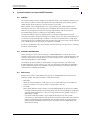
Figure 3. Voice transmission
Call from VoWiFi handset
Where a call request is sent depends on whether an IP-PBX or a traditional ISDN PBX is used
in the VoWiFi system.
1
The VoWiFi handset associates with the closest AP (the AP with the best signal
quality and strength).
2
A call request is sent either to the IP-PBX or to the VoIP Gateway.
3
The IP-PBX, or the VoIP Gateway, finds the receiving part and sets up the call.
13 December 2010 / Ver. E
7
Function Description
Ascom VoWiFi System
3.1.1
TD 92314GB
Two-Party Call
A call between two VoWiFi handsets is handled by the IP-PBX when using SIP, and by a
Gatekeeper/Gateway feature in the VoIP Gateway for an H.323-based exchange.
The IP-PBX or Gatekeeper makes the address translation, from alias to IP address, and sets
up the call.
The IPI-PBX or Gateway controls signalling and provides translation between the packetbased WLAN and circuit-switched ISDN networks when a VoWiFi handset is calling a nonVoWiFi handset.
3.1.2
In Call Menu
i62 VoWiFi handsets: The In Call menu can be reached during an ongoing call by pressing the
middle Soft key marked “More”. It gives access to a number of different functions.
i75 VoWiFi handsets: The right Soft key can be configured and used as a short-cut to
different functions during an ongoing call. These settings are configured by the system
administrator.
3.1.3
Push-To-Talk (PTT) Group Call
Note: PTT requires a phone number to some type of conference bridge (a specialized type of
equipment that links telephone lines). Configured groups are also needed in the system.
Groups can be configured in any Unite module that handle groups, refer to 3.2.2 Group
Messaging on page 11.
A PTT session can be initiated from the VoWiFi handset, or triggered by other events, for
example an alarm if an AMS or an XGate is available in the system.
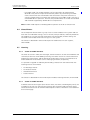
Figure 4.
Other
Unite module
Conference bridge
9999
group
no.
5
2
group
no.
LAN
3
5
4
5
1
IMS2/
Unite CM
AP
4
Initiation from handset
(1)
Look-up PTT group
(2)
4
Response IMS2/Unite CM (3)
Call to Conf. bridge
(4)
Group call connected
(5)
Figure 4. PTT session initiated by handset
13 December 2010 / Ver. E
8
Function Description
Ascom VoWiFi System
TD 92314GB
When the handset initiates a PTT session, it sends a message to the IMS2/Unite CM, that
includes the phone number to the conference bridge. If a PTT session is triggered by for
example an alarm, it is the AMS or XGate that sends the message. (All devices able to
initiate a session must know the number to the conference bridge.) When the IMS2/
Unite CM has found the PTT group, it forwards the message to all members in the group,
including the initiator if the initiator is a member of the group.
When the PTT session is accepted, either manually or automatically, the handset is
connected to the number that handles the conference/group calls and all handsets in the
PTT group are connected.
The mute button on the handset is used for shifting between sending and receiving and the
users have the possibility to talk simultaneously.
The function is described with more details in Function Description Push-To-Talk (PTT) in
VoWiFi System, TD 92493GB.
3.1.4
Supplementary Services
The supplementary services are supported by H.323/H.450 and SIP protocol.
H.323
SIP
H450.1
x
Supplementary Services
H450.2
x
Call Transfer
H450.3
x
Call diversion
H450.4
x
Call hold
H450.6
x
Call Waiting
H450.7
x
Message waiting indication
H450.8
x
Calling party name presentation
H450.9
–
Completion of calls to busy subscriber
13 December 2010 / Ver. E
Description
9
Function Description
Ascom VoWiFi System
3.2
TD 92314GB
Messaging Functions
The IMS2/Unite CM is a Unite module that acts as an interface between the VoWiFi system
and other modules in the Unite system. The IMS2/Unite CM has a number of features
available, for example Basic Alarm Manager and Portable Device Phonebook Service, but can
also be expanded with other Unite system features. The IMS2/Unite CM is an optional
module in the VoWiFi system.
The IMS2/Unite CM contains a dynamic database of all registered VoWiFi handsets. To
enable messaging functions between the VoWiFi handsets and the Unite system, the
handset logs on to the IMS2/Unite CM. This is done when the handset is switched on and
then in intervals. No user administration is needed.
All text messages to and from handsets within the VoWiFi system are handled by the IMS2/
Unite CM.
Message sending from the VoWiFi Handset
Prerequisites: The VoWiFi handset is associated with an AP and has logged in to the IMS2/
Unite CM (the IP address to the IMS2/Unite CM is defined in the handset).
1
The VoWiFi handset sends the message to the IMS2/Unite CM.
2
The IMS2/Unite CM performs a database look-up in the Unite Name Server (UNS) for
the receiving part and forwards the message.
Figure 5.
IMS2/
Unite CM
WinPDM
RADIUS
Server
IP Backbone / LAN
VoIP Gateway
PBX
AP
AP
VoWiFi handset
Figure 5. WLAN Infrastructures
See Installation and Operation Manual IMS2, TD 92586GB for more information about the
IMS2. See Installation and Operation Manual Unite CM, TD 92735GB for more information
about the Unite CM.
3.2.1
Interactive Messaging
Interactive Messaging (IM) is a function that extends the basic messaging function. It makes
it possible for a user of a handset to access information from a client application. When an
IM is initiated, a number of choices will be presented on the handset display. By selecting
one of these choices, an application-controlled action will take place. An action can be, for
example, to open a gate.
The IM function is described in detail in the document Function Description Interactive
Messaging, TD 92168GB. Note that the document describes the function from the Ascom
System 9d point of view.
13 December 2010 / Ver. E
10
Function Description
Ascom VoWiFi System
3.2.2
TD 92314GB
Group Messaging
A message from a VoWiFi handset can be sent to a group of users. The group is defined via
the Interface Group menu in the IMS2, via Group ID in ESS, or via Groups in Unite CM.
3.2.3
Availability Information/Absence
The VoWiFi handset reports availability status to the system via the Absence function.
When put in the charging rack, or when set in Manual Absent mode, the VoWiFi handset can
be reported as unavailable. Note that this status is set for messaging functions only.
The Absence function is handled by the IMS2/Unite CM, and the Manual Absent mode can be
set either from the VoWiFi handset or from the IMS2/Unite CM GUI.
3.2.4
Coloured Messaging (i62 VoWiFi handsets)
Messages can be colour-coded to make it easy to, for example, identify the priority/urgency
of the message or which department/building the message was sent from. The application
that sends the message determines the colour. There are ten different colours to choose
from. The application could, for example, be a machine supervision system or a medical care
system.
3.3
Mobile Data
It is possible to send user data from the handset by pressing a pre-programmed key (Hot
key, Soft key, Navigation key1, or Multifunction button1) or selecting a Service. Mobile data
can be used for opening a door, starting/stopping a machine etc. The data can either be
predefined, or entered after the Hot key/Soft key/Navigation key/Multifunction button is
pressed or a Service selected. The message is sent to the IMS2/Unite CM, which distributes it
further.
3.4
Alarm Handling
The VoWiFi handset can send several types of alarms. The alarms are messages sent to the
IMS2/Unite CM. The IMS2/Unite CM then distributes the messages to BAM or to other
modules/systems for further actions.
For a description of parameter settings and VoWiFi handset alarm keys, see the documents
User Manual i62 VoWiFi Handset, TD 92599GB, User Manual i75 VoWiFi Handset,
TD 92319GB, and Installation and Operation Manual IMS2, TD 92586GB.
3.4.1
Push-Button Alarm
The VoWiFi handset is equipped with a red alarm button. When the alarm button is pressed
twice within two seconds, the alarm is activated. An information text is displayed, by default
“Personal Alarm”. The alarm is sent to the IMS2/Unite CM, which distributes it further. It is
also possible to send a test alarm. Press and hold the alarm button until “Test Alarm” is
displayed.
Note: This alarm can always be triggered; when speaking, editing settings, or while the
phone is locked.
1.Ascom i62 VoWiFi handset
13 December 2010 / Ver. E
11
Function Description
Ascom VoWiFi System
3.4.2
TD 92314GB
No-Movement Alarm (i75 VoWiFi handsets)
The No-movement alarm is automatically sent when the user have not moved for a
predefined period of time (default 30 seconds). Seven seconds before the alarm is activated
a warning signal sounds and the “No-movement on” icon starts to flash. If the user does not
cancel the alarm when the signal sounds, the alarm is sent and “No-movement” is shown in
the handset display.
The No-movement alarm can be followed by an Acoustic Location Signal (ALS), see section
3.4.7 Acoustic Location Signal.
By setting the parameter “Extra delay”, the time before the warning for an alarm can be
extended up to ten minutes (default value 30 seconds) and no alarm will be triggered
during this time period. When the warning signal sounds, press the Mute button to cancel
until the alarm is triggered again.
3.4.3
Man-Down Alarm (i75 VoWiFi handsets)
The Man-down alarm will go off when a handset is tilted more than 45° for a predefined
period of time (default 30 seconds). Before the alarm is activated a warning signal sounds
and the “Man-down alarm on” icon starts to flash. If the user does not cancel the alarm by
pressing a key, it is sent and “Man-down Alarm” is shown in the display.
The functions ALS and Extra delay can be set for the Man-down alarm in the same way as
for the No-movement alarm.
3.4.4
Alarm with Predefined Data
Additional data, for example a location code, can be sent along with an alarm. The data must
manually be defined and stored by the user. To use the function, one Soft/Hot key in the
telephone must be defined as a short-cut to the menu “Edit alarm data”. The stored data is
added to all types of alarm at transmission.
3.4.5
Automatic Call after Alarm
The VoWiFi handset can be programmed to call a predefined telephone number directly
after an alarm. Each alarm type in the handset must be programmed with the specific
telephone number.
3.4.6
Automatic Alarm after Emergency Call
The VoWiFi handset can be programmed to automatically send an alarm after a call to the
emergency number. The emergency number is a specific number that can be set in the
handset, usually a country’s single emergency telephone number that allows a caller to
contact the emergency services for assistance.
3.4.7
Acoustic Location Signal
An alarm can be followed by an Acoustic Location Signal (ALS) to make it easier to
physically locate the handset. The ALS is a signal from the handset’s speaker that sounds for
a predefined period of time. It is silenced by pressing the Mute button on the handset.
3.4.8
Location of the VoWiFi Handset
When an alarm is triggered, the information is sent to the IMS2/Unite CM together with an
identification of the current AP used for the transmission. Real time location of the VoWiFi
handsets can also be performed with third-party software (for example Ekahau or Cisco
location servers), see Function Description Location in Ascom VoWiFi System, TD 92607GB.
13 December 2010 / Ver. E
12
Function Description
Ascom VoWiFi System
3.5
TD 92314GB
Presence Management
Note: Presence management requires a Presence Management system and an NTP server
for time and date. Refer to the Data Sheet i62 VoWiFi Handset, TD 92587GB, and Data Sheet
i75 VoWiFi Handset, TD 92318GB for supported Presence Management system.
All activities are programmed in the Presence Management system, which also includes a list
with user name and password for each VoWiFi handset allowed to log in. The same user
name and password, and the address to the Presence Management system, must be
programmed in the handset. The Presence Management system has a LAN connection to the
IMS2/Unite CM.
The presence menu option is only available in the VoWiFi handset when it has been
programmed with the function and logged into and received the activity list from the
Presence Management system. When these criteria are fulfilled, the user has the possibility
to manage availability from the handset.
Figure 6.
AP
IMS2/
Unite CM
5
LAN
1
VoWiFi Handsets
VoIP Gateway
6
4
2
PBX
3
Presence
Management
System
Requests from handset
(1,5)
Responses from Presence
Mangement System
(2,6)
Information to PBX
(3)
Notification
(4)
Figure 6. Presence Management
An activity request (1) is sent to the Presence Management system when the user has
selected an activity from the list in the Presence menu, set the time limit for the activity and
pressed “OK”. The Presence Management system sends a response (2) with the status
(action successful or not), and if successful it sends information (3) to the PBX that this
number is occupied and any incoming call to this number is to be forwarded to, for example,
the operator, the voice mail box, or another number.
The Presence Management system then sends a notification (4) that the availability has
been updated to the IMS2/Unite CM. The IMS2/Unite CM forwards the notification to the
handset.
The handset sends a new request (5) for updated status to the Presence Management
system, which sends a response (6) with the active availability status. The handset stores
the information and the reason for being absent (for example Meeting), and the return time
is shown in the display.
13 December 2010 / Ver. E
13
Function Description
Ascom VoWiFi System
4
TD 92314GB
System Functions in Ascom VoWiFi Handsets
4.1
Mobility
The VoWiFi handset supports adaptive rate fallback, which is activated when moving away
from the AP in order to increase the operational range and thereby maintaining optimal
speech quality while occupying as few RF resources as possible.
Before speech starts to degrade due to low signal strength, the VoWiFi handset starts
scanning for other AP’s. The scanning starts well before the sensitivity limit is reached in
order to have enough time to perform scanning and handover and still maintain a
reasonable fading margin to make up for large fading variations.
To limit the handover impact on speech quality, the VoWiFi handset performs active
scanning in between transmission/reception of speech frames. This limits the packet loss to
a maximum of one packet during a handover, if no external authentication is used. After
scanning the best AP is selected, and if the AP meets the criteria of having a signal strength
that is 10 dB better than the current AP, handover is initiated.
In case of a congested or noisy environment, transmission errors will also cause a scanning/
handover to be initiated.
4.2
Channel Load Reduction
When scanning for APs in case of roaming, a standard IEEE 802.11 station will scan all
channels. During such a scan the station loads all channels, and the system experience is the
same as if there were real traffic present on other channels than 1, 6 and 11, leading to a
temporary degradation of performance.
The handset has the possibility to select exclusive usage of channels 1, 6 and 11 and
thereby reduce the system load of a scan. This also eliminates the problem introduced by
usage of adjacent channels. The handset’s roaming performance is well improved, since
scanning time is reduced significantly.
4.3
Power Save
Battery conservation is obtained through the use of standard IEEE 802.11e Power Save
mode (PS-mode). The operation differs in idle and call mode.
•
•
Idle mode
When the VoWiFi handset is in idle state, it is in PS-mode and listens for broadcasts/
multicasts/unicasts at an interval which is configurable at the AP.
Call mode
One of three different modes can be pre-configured depending on the type of handset:
- In ACTIVE mode the portable stays active during the call, only signalling PS-mode when
scanning different channels in case of roaming. When the call is ended, it returns to
idle mode (PS-mode).
- In U-APSD mode the portable is in PS-mode also during the call. The U-APSD
functionality is negotiated with the AP during association and provides the automatic
release of buffered packets immediately after an uplink packet. U-APSD maximizes
battery lifetime and performance. For use of U-APSD it must be supported by the
WLAN infrastructure.
13 December 2010 / Ver. E
14
Function Description
Ascom VoWiFi System
TD 92314GB
- In PS-POLL mode (i75 VoWiFi handsets only) the AP buffers all speech packets
destined to the phone. The phone retrieves the packets by transmitting a PS-POLL
frame. Those frames are transmitted at the same time as the phone transmits its
outgoing speech packet to minimize the awake time. The PS-POLL mode is not part of
normal IEEE 802.11 operations. However, the procedure does not violate the standard
and should be supported by all IEEE 802.11-compliant APs.
Note: PS-POLL mode requires a well-designed PS operation at the AP to function well.
4.4
Shared Phones
The shared phone feature allows a group of user to share handsets in the system and still
have their own individual settings, such as volume, alarm parameters, and local phonebook.
The handset has a virtual SIM card stored apart from the handset, and the settings are
retrieved to the handset when the user logs on to the system.
The function is described in Function Description Shared Phones in Ascom Systems,
TD 92468GB.
4.5
Licensing
4.5.1
Ascom i62 VoWiFi Handsets
The three versions i62 Talker, i62 Messenger, and i62 Protector use the same hardware and
software, but features are enabled by licensing. The Talker version has a basic license that
enables basic functionality, and the Messenger and Protector versions have licenses that
enable additional functionalities such as messaging and alarm, respectively.
It is possible to upgrade a handset by downloading a license from the License Web. The
following licenses are available:
•
•
•
•
i62 Messenger license
i62 Protector license
Shared Phone license
Location license
The function is described in Function Description Product Licensing Overview, TD 92677GB.
4.5.2
Ascom i75 VoWiFi Handsets
As default the basic alarm types (Push-button alarm, Test alarm, and Emergency alarm) are
available for the user. For optional alarm features (No-movement and Man-down alarm)
and location features the i75 VoWiFi handset requires a license. The license is activated from
the i75 home page.
13 December 2010 / Ver. E
15
Function Description
Ascom VoWiFi System
5
TD 92314GB
Related Documents
System Description Ascom VoWiFi System
TD 92313GB
System Planning Ascom VoWiFi System
TD 92408GB
Data Sheet i62 VoWiFi Handset
TD 92587GB
User Manual i62 VoWiFi Handset
TD 92599GB
Quick Reference Guide i62 VoWiFi Handset
TD 92597GB
Configuration Manual i62 VoWiFi Handset
TD 92675GB
Data Sheet i75 VoWiFi Handset
TD 92318GB
User Manual i75 VoWiFi Handset
TD 92319GB
Quick Reference Guide i75 VoWiFi Handset
TD 92320GB
Configuration Manual i75 VoWiFi Handset
TD 92431GB
Data Sheet IMS2
TD 92585GB
Installation and Operation Manual IMS2
TD 92586GB
Data Sheet Unite CM
TD 92739GB
Installation and Operation Manual Unite CM
TD 92735GB
Data Sheet Portable Device Manager, Windows version
TD 92324GB
Installation and Operation Manual Portable Device Manager,
Windows version
TD 92325GB
Data Sheet VoIP Gateway
TD 92323GB
Installation and Operation Manual VoIP Gateway
TD 92326GB
Function Description Interactive Messaging
TD 92168GB
Function Description Shared Phones in Ascom Systems
TD 92468GB
Function Description Push-To-Talk (PTT) in VoWiFi System
TD 92493GB
Function Description Location in Ascom VoWiFi System
TD 92607GB
Function Description Product Licensing Overview
TD 92677GB
13 December 2010 / Ver. E
16
Function Description
Ascom VoWiFi System
6
TD 92314GB
Document History
For details in the latest version, see change bars in the document.
Version
Date
Description
A
7 July 2006
First version
B
10 November 2006
Handset functions added
C
21 October 2007
Following chapters are added:
• 3.1.3 Push-To-Talk (PTT) Group Call on page 8
• 3.5 Presence Management on page 13
• 4.4 Shared Phones on page 15
D
29 September 2008 Added a reference to Function Description Location in
Ascom VoWiFi System, TD 92607GB, in chapter 3.4.8
Location of the VoWiFi Handset.
E
13 December 2010
13 December 2010 / Ver. E
• Replaced IMS/IP-WiFi with IMS2 throughout.
• Added Unite CM throughout.
• Added SIP Proxy Server and removed Portable Device
Manager, System version, in chapter 2 Technical Solution
on page 3.
• Added the Ascom i62 VoWiFi handset in chapter 2.3
Ascom VoWiFi Handsets on page 4.
• Changed the parameter examples and added DP1 in
chapter 2.4 Portable Device Manager Windows Version
(WinPDM) on page 5.
• Added device management in chapter 2.5 IMS2 on
page 5.
• Removed VLAN from 2.8 WLAN/LAN on page 6.
• Changed the description in chapter 3.1 Voice Functions
on page 7.
• Clarified the difference between H.323 and SIP in
chapter 3.1.1 Two-Party Call on page 8.
• Added In Call menu for the Ascom i62 VoWiFi handset
in 3.1.2 In Call Menu on page 8.
• Added chapter 3.2.4 Coloured Messaging (i62 VoWiFi
handsets) on page 11.
• Added that PS-POLL is only used by i75 VoWiFi
handsets in chapter 4.3 Power Save on page 14.
• Added chapter 4.5 Licensing on page 15.
17