1
Initial Culture Procedure
Important: The first propagation of cells should be for
generating stocks for future use.
Cells undergo
genotypic changes resulting in reduced responsiveness
over time in normal cell culture conditions. Therefore,
it is critical to prepare an adequate number of frozen
stocks at early passages.
1. Quickly thaw cells in a 37 oC water bath with constant
agitation.
2. Add 10 ml Complete Growth Media to a sterile 15 ml
centrifuge tube then add entire contents of the vial to
the media.
3. Spin at 2,000 rpm for 5 minutes.
4. Discard supernatant.
5. Add 1ml of Initial Growth Medium to suspend pellet.
6. Add 10ml of Initial Growth Medium to culture dish
and transfer suspended pellet to culture dish containing
Initial Growth Medium.
7. Pipette cells up and down to ensure the transfected cells
are mixed well in the medium.
8. Place the culture dish with cells in a humidified
incubator at 37 oC with 5% CO2.
9. After 48 hours, change to Complete Growth Media.
10. Change media every 2-3 days using Complete Growth
Media.
11. When cells reach 90% confluency (usually within 1
week), prepare frozen stocks and continue propagate
the rest of the culture for future assays.
12. Transfer vials from -80oC to liquid nitrogen for long
term storage.
Assay procedure
The following procedure should be followed as a guideline.
You will need to optimize the assay conditions based upon
your experimental set up.
1.
2.
3.
4.
5.
6.
7.
8.
9.
10.
11.
12.
13.
The day before performing the assay, trypsinize the cells
and plate each well of a 96-well plate with 5 X 10^4 cells
in 100ul.
Incubate the plate in a humidified incubator at 37 oC with
5% CO2 overnight.
Prepare inducing reagent at the optimal concentration in a
10ul volume.
Add inducing reagent directly to each well and incubate
for an appropriate time to produce maximal induction.
Remove the media by aspiration and add 100ul of 1X
PBS to each well.
Remove the media by aspiration and add 50ul of lysis
buffer to each well.
Incubate cells in lysis buffer for a few minutes at room
temperature.
Rock culture dish several times to ensure complete
coverage of the cells with lysis buffer. Pipette up and
down to ensure complete lysis of cells.
Perform one freeze-thaw cycle at -80oC and room
temperature.
Gently pipet up and down 2-3 times to mix.
Transfer 20ul of each lysate to a new 96-well plate for the
luciferase assay.
Add 100ul of luciferase substrate to each well and gently
pipette up and down.
Immediately read the plate in a luminometer.
Prepare frozen stocks
1.
2.
3.
4.
5.
6.
7.
8.
9.
Carefully remove the culture media from cells by
aspiration.
Rinse cells with PBS, being careful to not dislodge
attached cells. Then remove PBS by aspiration.
Add 2ml of 0.25% Trypsin/0.53mM Tris-EDTA
solution to the culture dish.
Let the dish incubate with Trypsin for a few minutes or
until cells have detached. Confirm detachment by
observation under the microscope.
Add 10ml of pre-warmed Complete Growth Media and
gently pipette up and down to break the clumps.
Transfer cells to a 15ml conical centrifuge tube and
centrifuge at 2000 rpm for 5 minutes to collect the cells.
Aspirate the culture media and resuspend cells at a
density of 5 x 10^6 cells/mL in freezing media.
Aliquot 1ml cells into cryogenic vials.
Place vials in a freezing container and store at -80oC
overnight.
Data Example
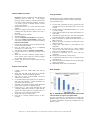
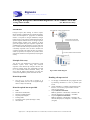
Fig. 2: T47D/ER-luc cells were treated with various
concentrations in response to 17β-Estradiol
The cells were seeded on a 96-well plate for overnight with
DMEM including 10% FBS. The cells then were treated with
or without 17B-Estradiol respectively in DMEM and 0.1%
FBS for 16 hours.
Signosis, Inc. • 1700 Wyatt Drive Suite 10-12 • Santa Clara, CA 95054 • Tel 408 747 0771 • Fax 408 864 2182