1
An Opencores /Opensource Based Embedded System-on-Chip Platform for Voice over Internet
147
Telecommunication Union (ITU-T),(ITU, 2007) responded by developing the H.323 standard.
Afterwards, the focus was the possibility of placing long distance calls using voice over IP
known as toll bypass; however this required setting up a connection between the telephone
network (PSTN) and the data network, a task performed by the so called Gateways. The result
has been additional application for VoIP including: PC-to-phone, Phone-to-PC and, when two
gateways are used, Phone- to - phone communication is established. This last option was the
catalyst in the establishment of a new provider group named ITSP (Internet Telephone Service
Provider) that permits telephony over IP within the provider network using prepaid cards. To
date, VoIP refers to the ability to transfer data and voice and also video on the single network.
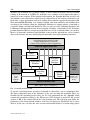
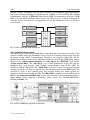
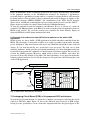
Figure 1 illustrates the basic operating principle of VoIP.
The human voice initially generates an analog signal. This signal is converted into a bit
stream by an Analog/ Digital (A/ D) converter. And then submitted to a multiple
compression process. The Voice frames are integrated into a voice packet. First RTP (Real
time protocol) packet with a 12 address byte header is created. Then an 8-byte UDP packet
with the source and destination address is added. Finally, a 20 byte IP header containing
source and destination gateway IP address is added.The packet is sent through the internet
where routers ands switches examine the destination address. When the destination receives
the packet, the packet goes through the reverse process for playback. A minimal VoIP
implementation requires two functionalities. First, it should be able to connect to other VoIP
phones and, second, voice data should be carried by the Internet. The first requirement is
fulfilled by using signaling.
The second one is achieved by using speech coding algorithms.
2.1 VOIP signaling
Signaling enables individual network devices to communicate with one another. Both PSTN
and VoIP networks rely on signaling to activate and coordinate the various components
needed to complete a call. In a PSTN network, phones communicate with a time-division
multiplexed (TDM) Class 5 switch or traditional digital private branch exchange (PBX) for
call connection and call routing purposes. In a VoIP network, the VoIP components
communicate with one another by exchanging IP datagram messages. The format of these
messages may be dictated by any of several standard protocols. The most commonly used
signaling protocols –Session Initiation Protocol (SIP), H.323 and Media Gateway Control
Protocol (MGCP). In this paper interest is given to the SIP protocol (Rosenberg & al, 2002).
2.1.1 Session Initiation Protocol (SIP)
SIP is a signalling protocol for initiating, managing and terminating sessions across packet
networks. These sessions include Internet telephone calls, multimedia distribution, instant
messaging, and multimedia conferences. SIP invitations are used to create session that
allows participants to agree on a set of compatible media types. SIP makes use of elements
called proxy servers to help route requests to the user’s current location, authenticate and
authorize users for services, implement provider call-routing policies, and provide features
to users. SIP also provides a registration function that allows users to upload their current
locations for use by proxy servers. SIP clients are referred to a SIP User Agents, and may
make peer-to-peer calls, though usually they register and setup sessions via a SIP proxy. SIP
can run on top of several different transport protocols though it most commonly uses UDP
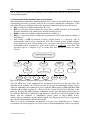
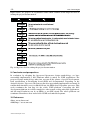
over Internet Protocol. Figure 2 shows the SIP session establishment.
www.intechopen.com