1
weight bearing in mice22. Ct.Ar increased in rats receiving strontium ranelate23. Boys during and after puberty
have been found to have a higher Ct.Ar than girls of the same maturity19. Further, Ct.Ar is greater in men than
women and has a positive correlation with height and weight and a negative correlation with age24.
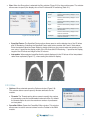
Medullary (or marrow) area (Ma.Ar, mm2) is the cross-sectional area of the medullary part of the bone on
any given transverse section. Treatments that tend to increase total cross-sectional area Tt.Ar and cortical
area Ct.Ar lead to a decrease in Ma.Ar, as an increase in bone area also increases the ratio of cortical
to medullary bone. Two examples of such treatments include an increase in mechanical loading25 and a
sclerostin inhibitor26. Sclerostin is a bone regulatory protein produced by osteocytes that inhibits bone
formation27.
Cortical area fraction (Ct.Ar/Tt.Ar, %) is the ratio of cortical cross-sectional area to total cross-sectional
area within a given transverse section. Ct.Ar/Tt.Ar has been found to significantly increase with a 25 mg/kg
dose of sclerostin inhibitor in rats26.
Average cortical thickness (Ct.Th, mm) is the average thickness of the cortex in each transverse section.
There have been conflicting results about the correlation of Ct.Th with the incidence of vertebral fracture.
Ct.Th has been found by Ostertag et al. to be the same in patients with and without vertebral fracture12, while
in a study by Qiu et al., Ct.Th was found to be an effective measure to discriminate between patients with
and without vertebral fracture11. Vertebral Ct.Th has been demonstrated to vary along the length of the spine
with higher values in the cervical and lumbar spine and lower values in the thoracic spine28. Vertebral Ct.Th
decreases with age in the lower thoracic and lumbar spine28 and femoral neck13 but does not vary with gender
and is lower in patients with osteoporosis than in a control group28. Mice receiving a sclerostin inhibitor27 and
postmenopausal osteoporotic women receiving strontium ranelate29 experienced a significant increase in Ct.Th.
Periosteal perimeter (Ps.Pm, mm) is the perimeter of the periosteum (the membrane around the outside of
the cortex) and is calculated for each transverse section. Ps.Pm was found to increase as a result of jump
training30 and strontium ranelate treatment in female rats23 and as a result of treadmill running in male mice31.
Endocortical perimeter (Ec.Pm, mm) is the perimeter of the endosteum (the membrane that forms the
boundary between the cortex and medulla) and is calculated for each transverse section. Ec.Pm was found
to increase along with periosteal perimeter (Ps.Pm, above) as a result of treadmill running in male mice,
indicating endocortical resorption along with periosteal formation of bone31.
Moment of inertia about the anteroposterior axis (Iap, mm4) is a measure of how material is distributed
about the anatomical anteroposterior (front to back) axis through the area centroid of each slice20. Area
moments of inertia are also known as second moments of area, or SMAs, and characterize resistance to
bending around a given axis20. Exercise has been shown to increase Iap in the tibia of male mice31.
Moment of inertia about the mediolateral axis (Iml, mm4) is a measure of how material is distributed about
the anatomical mediolateral (left to right, or right to left) axis through the area centroid of each slice20. Area
moments of inertia are also known as second moments of area, or SMAs, and characterize resistance to
bending around a given axis20. Low Iml has been determined to be a risk factor for stress fracture in the tibia32.
Maximum moment of inertia (Imax, mm4) is a measure of how material is distributed about the major
centroidal axis, which is orthogonal to the minor centroidal axis. Maximum moment of inertia correlates to the
maximum bending strength of a bone33. Area moments of inertia are also known as second moments of area,
or SMAs, and characterize resistance to bending around a given axis20.
21