1
ALGOL STATEMENTS
CONTINUE STATEMENT
The Continue statement IS valid In only those contexts
valid for the DONE statement (see page 17); the “Loop
Block” IS determined in the same way (i.e. implicitly or
by specifying a block name). All loops out to the Loop
Block are terminated as If DONE had been requested.
C o n t r o l IS t r a n s f e r r e d t o a pornt i n s i d e t h e l o o p
contalnlng the Loop Block, but after all statements in
the loop. Example:
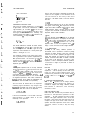
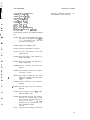
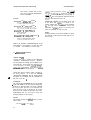
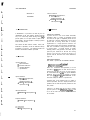
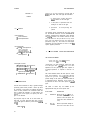
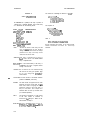
FOR I-i STEP 1 UNTIL N DO BEGIN
I I *
CONTINUE;
END
”’
is semantlcally equivalent to:
FOR I-1 STEP 1 UNTIL N DO BEGIN
LABEL CONT;
&TO CONT;
,.,
CONT:
END
-_
PEOCEDURE STATEMENTS
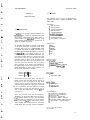
A Procedure statement is used to invoke the execution
of a Procedure (see page 7). After execution of the
Procedure, control
returns to the statement
Immediately followtng the Procedure statement. SAIL
does allow you to use typed Procedures as procedure
statements. The value returned from the Procedure is
simply &carded.
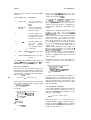
The actual parameters supplied to a Procedure must in
tnatch t h e f o r m a l p a r a m e t e r s d e s c r i b e d i n t h e
procedure declaration, modulo Sail type conversion.
Thus one may supply an integer expression to a real
formal, and type conversion will be performed as on
page
21
If an actual parameter is passed by VALUE, only the
value of the expression is given to the Procedure. This
value may be changed or examined by the Procedure,
but this will in no way affect any of the variables used
to evaluate the actual parameters. Any algebraic
expression may be passed by value. Neither Arrays
nor Procedures may be passed by value (use ARRBLT,
page 43, to copy arrays). See the default
declarations for parameters in page 8.
If an actual parameter is passed by REFERENCE, its
address IS passed to the Procedure. All accesses to
the value of the parameter made by the Procedure are
made IndIrectly through this address. Therefore any
change the Procedure makes in a reference parameter
WIII change the value of the variable which was used
as an actual parameter. This is sometimes useful.
However If it IS not Intended, use of this feature can
18
SAIL USER MANUAL
also be sotnewhat confusing as well as moderately
IneffIcient. Reference parameters should be used only
where needed.
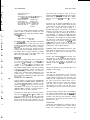
Variables, constants, Procedures, Arrays, and most
expresslons may be passed by reference.No String
expressions (or String constants) may be reference
parameters.
If an expression is passed by reference, its value is
first placed in a temporary location; a constant passed
by reference is stored in a unique location. The
address of this location is passed to the Procedure.
Therefore, any values changed by the Procedure via
reference parameters of this form will be inaccesible
to the user after the Procedure call. If the called
program is an assembly language routine which saves
the parameter address, it is dangerous to pass
expresslons to it, since this address will be used by
the compiler for other temporary purposes. A warning
message will be printed when expressions are called
by reference.
The type of each actual parameter passed by
reference must match that of its corresponding formal
parameter, modulo Sail type conversion. The exception
is reference string formals, which must have string
variables (of string array elements) actual passed to
If an algebraic type mismatch occurs the
them.
compiler will create a temporary variable containing
the converted value and pass the address of this
temporary as the parameter. A warning message will
be printed. An exception is made for Fortran calls
( s e e p a g e 19).
PROCEDURES AS ACTUAL PARAMENTERS
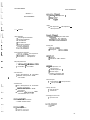
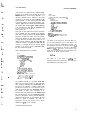
If an actual parameter to a Procedure PC is the name
of a Procedure PR with no arguments, one of three
things might happen:
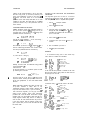
1) If the corresponding formal parameter
requires a value of a type matching that
of PR (in the loose sense given above in
page 18), the Procedure is evaluated and
its value is sent to the Procedure PC.
If the formal parameter of PC requires a
reference Procedure of identical type, the
address of PR is passed to PC as the
actual parameter.
If the formal parameter requires a
reference variable, the Procedure is
evaluated, Its result stored, and its address
passed (as with expressions in the previous
paragraph) as the parameter.
If a Procedure name followed by actual parameters
appears as an actual parameter it is evaluated (see
functions, page 24). Then if the corresponding formal