1
2
Mark P. Jones
and intuitions about the way the code works—from high-level architectural
perspectives to low-level issues like the selection and implementation of data
structures—may be documented at this time, and the evolving system may
be subjected to code inspections and reviews. Diagnostics from compilers
and program analysis tools may also be used to identify problem areas and
construct to-do lists of tasks that require further attention.
– Once the basic structure is firmly in place, developers might use tools based
on formal methods—such as model checkers or theorem provers—to establish
or obtain evidence for key properties. Effective use of such tools can require
significant investment, both in initial training and in daily use, and may,
therefore, be considered too expensive in the early stages of a project while
significant structural changes are still likely. On the other hand, these tools
can also be used to obtain very strong guarantees about program behavior—
such as freedom from deadlock, or verification of security or communication
protocols—that will be particularly important in safety or security critical
applications where a high degree of assurance is required.
– Finally, as the project approaches a release date or is prepared for deployment, more emphasis is likely to be placed on compatibility testing, performance tuning, usability issues, documentation, and installation procedures.
In practice, few (if any) software projects follow such a simple, linear course
of development with clear and neat divisions between different stages. Instead,
they evolve in complex and unpredictable ways as bugs are detected and fixed,
as users clarify or change their needs or request new functionality, and as the
development efforts adapt to reflect changing priorities and emphasis. This suggests a new opportunity to use evidence as as a mechanism for identifying and
tracking change. Moreover, it suggests that we need new ways to allow evidence
to be reused, repeated, or replayed so that validity of an evolving system can be
checked without the need to reconstruct evidence from scratch at every step.
1.1
This Paper
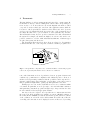
This paper summarizes our efforts to design new kinds of tools that facilitate
efficient and effective use of evidence throughout a project. More specifically,
our goal is to build tools that allow users to capture evidence and collate it with
source materials; to exploit dependencies between evidence and the programs to
which it refers as a means of tracking change; to automate the process of combining and reusing evidence; and, finally, to understand, manage, and guide further
development and validation efforts. In addition, we recognize that evidence may
come in many different forms, and that tools must be designed to address this.
For example, each of the following may be useful as evidence:
– An assertion of validity, digitally signed by the person who makes the claim;
– A set of test data, including the expected output and the date when the
tests were last run;
– A citation, URL, or the full text of a document that provides the proof of a
theorem or the specifications of a component;