1
Comments
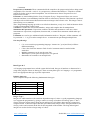
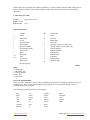
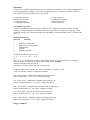
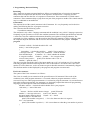
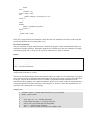
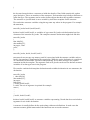
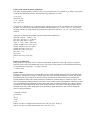
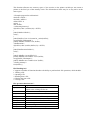
Preprocessor Commands: These commands tells the compiler to do preprocessing before doing actual
compilation. Like #include <stdio.h> is a preprocessor command which tells a C compiler to include
stdio.h file before going to actual compilation. You will learn more about C Preprocessors in C
Preprocessors session.
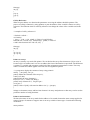
Functions: are main building blocks of any C Program. Every C Program will have one or more
functions and there is one mandatory function which is called main() function. This function is prefixed
with keyword int which means this function returns an integer value when it exits. This integer value is
retured using return statement.
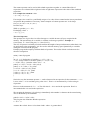
The C Programming language provides a set of built-in functions. printf() is a C built-in function which
is used to print anything on the screen.
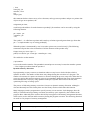
Variables: Variables are used to hold numbers, strings and complex data for manipulation.
Statements & Expressions : Expressions combine variables and constants to create new values.
Statements are expressions, assignments, function calls, or control flow statements which make up C
programs.
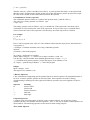
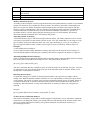
Comments: are used to give additional useful information inside a C Program. All the comments will
be put inside /*...*/ as given in the example above. A comment can span through multiple lines.
Note the followings
•
•
•
•
•
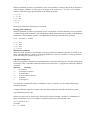
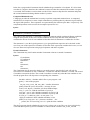
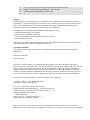
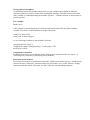
C is a case sensitive programming language. It means in C printf and Printf will have
different meanings.
C has a free-form line structure. End of each C statement must be marked with a
semicolon.
Multiple statements can be one the same line.
White Spaces (ie tab space and space bar ) are ignored.
Statements can continue over multiple lines.
Data Types in C
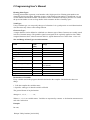
A C language programmer has to tell the system before-hand, the type of numbers or characters he is
using in his program. These are data types. There are many data types in C language. A C programmer
has to use appropriate data type as per his requirement.
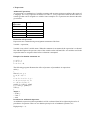
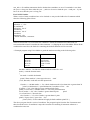
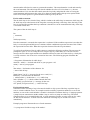
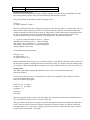
Primary data type
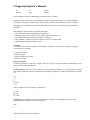
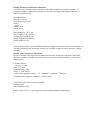
All C Compilers accept the following fundamental data types
1.
2.
3.
4.
Integer
Character
Floating Point
Double precision floating
point
5. Void
int
char
float
double
void
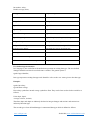
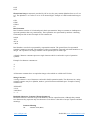
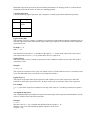
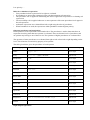
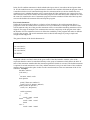
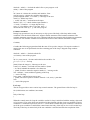
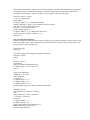
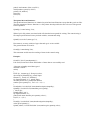
Integer Type :
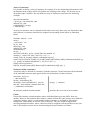
Integers are whole numbers with a machine dependent range of values. A good programming language
as to support the programmer by giving a control on a range of numbers and storage space. C has 3
classes of integer storage namely short int, int and long int. All of these data types have signed and
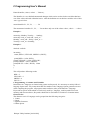
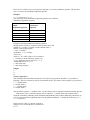
unsigned forms. A short int requires half the space than normal integer values. Unsigned numbers are
always positive and consume all the bits for the magnitude of the number. The long and unsigned
integers are used to declare a longer range of values.
www.valleyui.com
–Rabin Rai (www.click2solution.com)