1
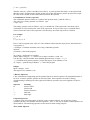
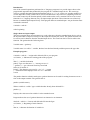
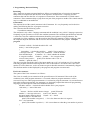
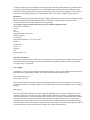
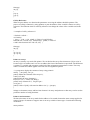
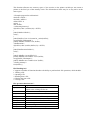
function1(a1,a2,a3……an)
}
function1(f1,f2,f3….fn);
{
function body;
}
here a1,a2,a3 are actual arguments and f1,f2,f3 are formal arguments.
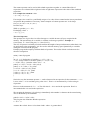
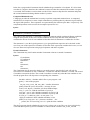
The no of formal arguments and actual arguments must be matching to each other suppose if actual
arguments are more than the formal arguments, the extra actual arguments are discarded. If the number
of actual arguments are less than the formal arguments then the unmatched formal arguments are
initialized to some garbage values. In both cases no error message will be generated.
The formal arguments may be valid variable names, the actual arguments may be variable names
expressions or constants. The values used in actual arguments must be assigned values before the
function call is made.
When a function call is made only a copy of the values actual arguments is passed to the called
function. What occurs inside the functions will have no effect on the variables used in the actual
argument list.
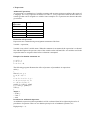
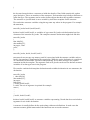
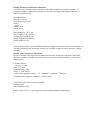
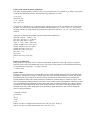
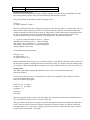
Let us consider the following program
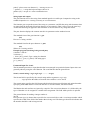
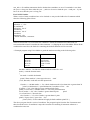
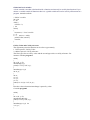
/*Program to find the largest of two numbers using function*/
#include
main() { int a,b; printf(“Enter
the two numbers”);
scanf(“%d%d”,&a,&b);
largest(a,b)
}
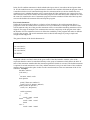
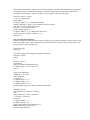
/*Function to find the largest of two numbers*/ largest(int
a, int b)
{
if(a>b)
printf(“Largest element=%d”,a); else
printf(“Largest element=%d”,b);
}
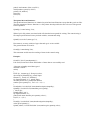
in the above program we could make the calling function to read the data from the terminal and pass it
on to the called function. But function does not return any value.
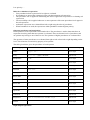
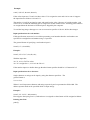
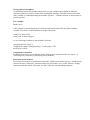
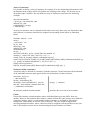
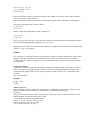
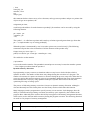
Functions with arguments and return values:
The function of the type Arguments with return values will send arguments from the calling function to
the called function and expects the result to be returned back from the called function back to the
calling function.