1
6
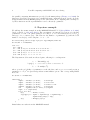
Parallel computing with MCMC and data cloning
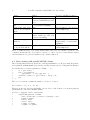
inits
NULL
Self contained named
list
Named list with references to global environment
Self contained function
Function using random
numbers
Fuction with references
to global environment
Effect
Initial values automatically
generated with RNG type and
seed
inits used, RNG type and
seed generated if missing
ditto
Notes for parallel execution
None
Function used to generate
inits, RNG type and seed
generated if missing
ditto
None
ditto
None
Objects must be exported by
clusterExport()
Parallel RNG should be set by
dcoptions() or clusterSetupRNG()
Objects must be exported by
clusterExport()
Table 1: Different ways of providing initial values and notes for parallel executions. Self
contained means that the object has no reference to other objects or environments, neither
random numbers are generated within a self contained function.
4.1. Data cloning with parallel MCMC chains
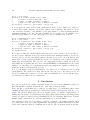
The following simple function allows us to switch parallelization on/off (by setting the parallel argument as TRUE/FALSE, respectively), and also measure the processing time in minutes:
R> timerfitfun <- function(parallel = FALSE, ...) {
+
t0 <- proc.time()
+
mod <- if (parallel)
+
jags.parfit(...) else jags.fit(...)
+
attr(mod, "timer") <- (proc.time() - t0)[3] / 60
+
mod
+
}
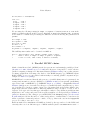
The vector n.clones contains the number of clones to be used:
R> n.clones <- c(1, 2, 5, 10, 25)
First we fit the five models sequentially (one model for each element of n.clones) without
parallelization of the three MCMC chains:
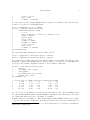
R> res1 <- lapply(n.clones, function(z)
+
timerfitfun(parallel = FALSE,
+
data = dclone(dat, n.clones= z, multiply = "N"),
+
params = params,
+
model = model,
+
inits = inits,
+
n.adapt = n.adapt,
+
n.update = n.update,