1
EE 400L
Analog
University of Nevada Las Vegas
Linear
Modulations
Experiment#1
Department of Electrical and Computer Engineering
3- SSB GENERATION
There are three well known methods of SSB generation using analog techniques, namely the filter
method, the phasing method, and Weaver’s method. This experiment will study the phasing method.
Filter method
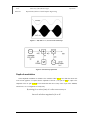
We have already modeled a DSBSC signal. An SSB signal may be derived from this by the use of a
suitable bandpass filter –commonly called, in this application, an SSB sideband filter. This, the filter
method, is probably the most common method of SSB generation. Mass production has given rise to
low cost, yet high performance, filters. But these filters are generally only available at ‘standard’
frequencies (for example 455 kHz, 10.7 MHz) and SSB generation by the filter method at other
frequencies can be expensive. For this reason TIMS no longer has a 100 kHz SSB filter module,
although a decade ago these were in mass production and relatively inexpensive.
Phasing method
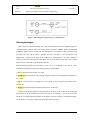
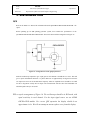
The phasing method of SSB generation, which is the subject of this experiment, does not require
an expensive filter, but instead an accurate phasing network, or quadrature phase splitter (QPS). It is
capable of acceptable performance in many applications.
The QPS operates at baseband, no matter what the carrier frequency (either intermediate or final), in
contrast to the filter of the filter method.
SSB signal
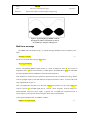
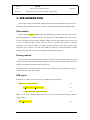
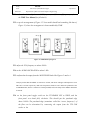
( ), a DSBSC signal is defined by:
Recall that, for a single tone message
( )
(
(
)
)
....12
(
)
.... 13
....14
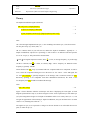
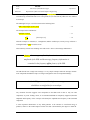
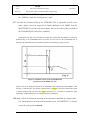
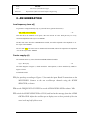
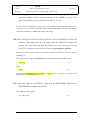
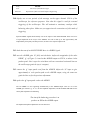
When, say, the lower sideband (LSB) is removed, by what ever method, then the upper sideband
(USB) remains.
(
)
.... 15
9