1
Appendix II. Checking for high frequency interference
There was an Old Man who supposed
That the street door was partially closed;
But some very large Rats
Ate his coats and his hats
While that futile Old Gentleman dozed.
(– Edward Lear, “Book of Nonsense,” 1846)
Don't be futile.
Rather than assuming that the door is shut to high frequency interference that might corrupt your
measurements, you should verify that troublesome frequencies do not exist. You can use the
application file AAMspect.dms with DAPstudio to quickly determine how much (if any) residual
exposure you have to aliasing at the time of your high-rate sampling.
Connect one xDAP input channel to the signal that you intend to sample, with signal terminations and
signal source as close as possible to conditions you expect for the finished application. The following
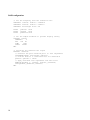
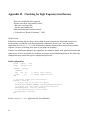
configuration shows how this signal is sampled and processed.
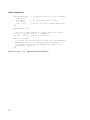
DAPL configuration:
PIPES
PIPES
pSpect
word
pAvSpect word
IDEFINE highrate
CHANNELS
1
SET
IP0 D0
TIME
2.0
END
// Select input channel
// 500000 samples/second
// Calculate signal power distribution
PDEFINE simulate
// Analyze data from high-rate channel
MIXRFFT(500,FORWARD,HAMMING,IP0,HALF,MAGNITUDE,pSpect)
// Average over 100 blocks (1/10 second duration)
BAVERAGE(pSpect, 250,100, pAvSpect)
// Send spectrum data to host system
COPY(pAvSpect, $BinOut)
END
See the AAMspect.dms application file for DAPstudio.
21