1
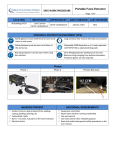
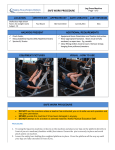
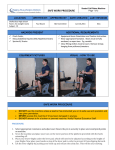
SAFE WORK PROCEDURE Cold-Shot Pipe Freezing Unit (GENERAL) Page 1 of 5 LOCATION WRITTEN BY: APPROVED BY: DATE CREATED All Buildings PTSD Lorie Carriere Brent Vandenbosch Brent Vandenbosch Feb 5, 2015 LAST REVISION New PERSONAL PROTECTION EQUIPMENT (PPE) Safety glasses or face shield must be worn at all times in work areas. Long and loose hair must be tied back and covered Safety footwear must be worn at all times in the work area. Close fitting/protective clothing must be worn. Remove strings hanging from pullovers/sweaters. Protective gloves are also required. Photos Photo 1 Photo 2 HAZARDS PRESENT MSI injuries Cold surfaces - frostbite CO2 leaks – frostbite, asphyxiation (CO2 displaces O2), etc. Burns – hot water Electrical shock Primary Risk Area ADDITIONAL REQUIREMENTS Equipment orientation Never leave machine operating while unattended Hot work permit Use tools only for their intended purpose Read and understand general safety procedures in the user manual. SAFE WORK PROCEDURE Cold-Shot Pipe Freezing Unit (GENERAL) Page 2 of 5 SAFE WORK PROCEDURE PRE-OPERATIONAL SAFETY CHECKS: 1. 2. 3. 4. 5. Inspect required personal protective equipment and replace if required. Ensure no slip/trip hazards are present in workspaces and walkways. Faulty equipment must not be used. Immediately report suspect machinery. Do not operate within two feet of open flames. Work only in well ventilated areas. If you have to work in a confined space you must use ventilation equipment. 6. Protective eye wear and rubber gloves must be work at all times while operating this equipment. 7. Only use CO2 cylinders equipped with a dip tube. 8. Do not connect a pressure reducer to the cylinder. 9. Keep the cylinder in an upright position and secure it to prevent it from falling over 10. Do not completely empty the cylinder. 11. Use only the parts and accessories recommended by the manufacturer. Do not substitute parts. 12. Do not touch the freeze heads while frosted. Touching the freeze heads while frosted can cause frostbite. Wear gloves if handling during use. 13. Before opening piping system, test to confirm that the ice plugs are fully formed and stable. Opening the system before a plug is formed can cause burns, electric shock or other serious injury or result in flooding or other property damage. 14. Do not leave this equipment operating while unattended. 15. Never hit a chilled freeze head with a hammer or other tool. This will cause the heads to shatter. 16. Do not over tighten the heads. Gas must be allowed to escape. Over tightening increases the chance of the heads shattering. 17. Do not use machine if it is damaged. Immediately report any damages to your supervisor. SAFE WORK PROCEDURE Cold-Shot Pipe Freezing Unit (GENERAL) Page 3 of 5 OPERATION: 1. Inspect and don all personal protective equipment: safety glasses, rubber gloves and safety footwear. Remove all jewelry; loose clothing and tie back hair. 2. Transport the unit to the location where the work will be conducted. 3. Place the CO2 cylinder so that freeze heads can reach desired points. Set the unit up on a level, stable surface. 4. Determine the location for the freeze plug(s). a) The location must allow access for at least one freeze head b) If the system will be soldered, brazed, welded, or other heat adding processes performed, the freeze plug(s) must be located as far away from the repair as possible. c) Ice plugs must be more than one foot (0.3 m) away from end caps, elbows, closed valves, other ice plugs or similar obstructions. Placing an ice plug closer can cause splitting of the pipe or tube. d) Do not place ice plugs closer than 5 feet (1.5 m) from a circulating hot water main. 5. Prepare the freeze plug locations. Remove all insulation and coatings from the pipe down to bare metal. If needed, remove any corrosion with a wire brush. 6. Remove the seal from the CO2 cylinder. 7. Screw the connector with the T-distributor onto the cylinder (right –hand thread clockwise). 8. Screw the spiral hoses onto the T-distributor. Note: if only one freeze head is needed, use the locking nut to close half of the T-distributor. 9. Choose the freeze heads which correspond to the size of the pipe to be frozen. Place the freeze heads onto the pipe and secure by tightening the knobs evenly, using the hex head wrench provided to give a firm but not overly tight hold. Warning: over tightening can cause stress fractures of the freeze head and cause it to shatter. 10. Push each injector into the bore of the freeze head until it is completely inserted and resting against the stop, then turn clockwise one quarter turn to lock in place. Warning: freeze heads must be positioned at least 40” (1M) apart from each other. Freeze head clamp CO2 injector 11. Turn off all pumps to stop the flow of liquid in the pipe. Allow the water to cool to room temperature before freezing. 12. Fully open the cylinder valve. Dry ice will form inside the freeze heads with a temperature of 110°F (-79°C) and freeze the liquid within the pipe. Note: CO2 sputtering from the heads during operation is normal. SAFE WORK PROCEDURE Cold-Shot Pipe Freezing Unit (GENERAL) Page 4 of 5 13. If the freeze heads do not become cold and covered with ice and frost after a brief period (in accordance with the time table), this indicates that the liquid within the pipe is still flowing or is too warm. 14. Test to insure there is a complete ice blockage before starting the repair. Test by slightly opening a valve or loosening a fitting behind the desired blockage. If the leakage stops after a short while, the blockage is operational, if not, close the valve and continue the freezing process. 15. Once the ice plug has been completely formed the pipe can be opened. While work is in progress the flow of CO2 must be maintained. A stand-by cylinder is recommended. 16. When the repair is complete and system is closed, close the cylinder valve and wait until the pressure in the hose has returned to normal before removing them from the valve. Once the ice has completely melted, removed the injector at the end of the spiral hoses from the freeze head, then remove the freeze head from the pipe. Do not try to remove the freeze heads from the pipe until they are completely thawed. This can result in frostbite to hands and damage to the hoses and freeze heads. If an emergency situation occurs while conducting this task or there is an equipment malfunction, shut the equipment off immediately and unplug the power tool. REPORT ANY HAZARDOUS SITUATION TO YOUR SUPERVISOR IMMEDIATELY. SAFE WORK PROCEDURE Cold-Shot Pipe Freezing Unit (GENERAL) Page 5 of 5 REGULATORY REQUIREMENTS Mb. Regulations 217/2006, Part 16, Machines, Tools & Robots, Sections 16.1 – 16.18 WS&H Act W210, Section 4, 5, 7, 7.1 Operators Manual for the Super Freeze Pipe Freezing Unit