1
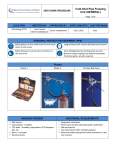
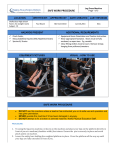
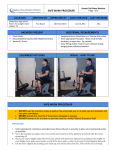
SAFE WORK PROCEDURE Portable Fume Extractor Page 1 of 4 LOCATION WRITTEN BY: APPROVED BY: DATE CREATED All Buildings PTSD Lorie Carriere Brent Vandenbosch Brent Vandenbosch April 22, 2014 LAST REVISION New PERSONAL PROTECTION EQUIPMENT (PPE) Safety glasses or face shield must be worn at all times in work areas. Long and loose hair must be tied back and covered Safety footwear must be worn at all times in the work area. Disposable P100 Respirator or a ½ mask respirator with HEPA Filters, wipes/sanitizing pads. Hearing protection must be worn when using this machine. Close fitting/protective clothing must be worn. Remove strings hanging from pullovers/sweaters. Protective gloves are also required. Photo 1 Photos Photo 2 HAZARDS PRESENT Smoke, fumes or dust produced from welding, cutting, grinding, painting, etc. Combustible dusts Burns – hot work, hot parts on the fume extractor Electrical shock Primary Risk Area ADDITIONAL REQUIREMENTS Equipment orientation Never leave machine running unattended Hot work permit Use tools only for their intended purpose Read and understand general safety procedures in the user manual. SAFE WORK PROCEDURE Portable Fume Extractor Page 2 of 4 SAFE WORK PROCEDURE This product is designed to capture and clean smoke and dust from light-duty welding, soldering, and grinding applications. When operating, air is drawn in to the nozzle, passes through the 2” diameter hose, then through the air cleaner’s filtration system, and is finally exhausted through the bottom discharge. When the hood is placed sufficiently close to the source of dust and smoke, three stages of filtration work to clean pollution from the air. First, a pre-filter section collects the large dust particles. Second, smaller particles are trapped in the fibers of the cartridge filter. Third, filtered air then passes through a carbon filter to remove any remaining odor before exhausting into the room. Note: if the equipment if fitted with a HEPA filter, the unit can be used in occupied areas. PRE-OPERATIONAL SAFETY CHECKS: 1. Inspect required personal protective equipment and replace if required. 2. Ensure no slip/trip hazards are present in workspaces and walkways. 3. Faulty equipment must not be used. Immediately report suspect machinery. 4. Dot not use this machine to extract smoke or fumes above 180°F / 82°C. 5. Do not use this machine to extract combustible dusts, liquid vapors, aggressive fumes such as acids. 6. Do not use this machine if the power cord has been damaged or ground removed. 7. Do not use this machine without a filter. 8. Inspect the machine before use and verify that it is working properly. 9. Do not breathe smoke, fumes, dusts, etc. 10. Do not use or install equipment where any potential for combustible fumes or dusts are present. 11. Do not leave this equipment running while unattended. 12. Do not use machine if it is damaged. Immediately report any damages to your supervisor. OPERATION: 1. Inspect and don all personal protective equipment: safety glasses / face shield, hearing protection, safety footwear. Remove all jewelry; loose clothing and tie back hair. 2. Turn the unit on and perform a function test. a) Turn switch to ON position b) LOOK: Is the unit level, stable, and that nothing is obstructing the extraction path. c) LISTEN: Does the motor and suction sound smooth and within expected volumes. d) FEEL: Place your hand on top of the unit and sense for unexpected vibration. Place you hand in front of the intake hood/surface and sense for expected level(s) of suction. 3. Transport the extractor to the location where the work will be conducted. 4. Set the unit up on a level, stable surface and plug in to an outlet. 5. Turn the power switch to the ON position. 6. Verify that the Filter monitoring light is not on. The lamp lights up when the sensor detects that filter maintenance is required. Operating the unit for extended periods of time with the Filter Indicator Light illuminated may cause the motor to overheat. 7. Position the nozzle directly next to the work area. Position the nozzle so that it will pull the fumes away from the workers breathing zone. SAFE WORK PROCEDURE Portable Fume Extractor Page 3 of 4 REPLACING THE FILTER: 1. 2. The Filter Indicator Light will come on if the filters become clogged. Operating the unit for extended periods of time with the Filter Indicator Light illuminated may cause the motor to overheat. 3. Turn off power and disconnect input power cord. 4. Detach front body by first unclasping twist-lock latches located on each side of the main body. 5. Remove Filter gently so as to minimize agitating dirt and dust, and place it in a bag/container. 6. Clean filter: • Use clean/dry air only at a pressure not more than 80PSI at 12” from media. Direct the compressed air through the filter from the clean side, running the nozzle up and down the filter pleats. • Do not bring either nozzle in contact with the filter media as damage is likely to occur. 7. Inspect filter for any damage and replace if necessary. 8. Clean cabinet interior of dirt and debris. 9. Reassemble by first installing the clean filter; then reattach the front body and re-engage the twist-lock latches on each side of the main body. 10. Turn ON unit and check Filter Indicator Light. If lamp is illuminated, repeat all steps above. If an emergency situation occurs while conducting this task or there is an equipment malfunction, shut the equipment off immediately and unplug the power tool. REPORT ANY HAZARDOUS SITUATION TO YOUR SUPERVISOR IMMEDIATELY. SAFE WORK PROCEDURE Portable Fume Extractor Page 4 of 4 REGULATORY REQUIREMENTS Mb. Regulations 217/2006, Part 16, Machines, Tools & Robots, Sections 16.1 – 16.18 WS&H Act W210, Section 4, 5, 7, 7.1 Operators Manual for the Fred Mini Vac Portable Fume Extractor