1
Chapter 3. An LFSR Specification
40
41
42
43
44
45
46
47
48
49
50
51
52
53
54
55
56
57
58
59
60
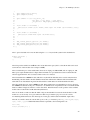
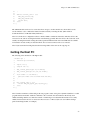
#include <stdio.h>
>>>;
record=<<<
printf(LSE_time_print_args(LSE_time_now));
printf(": bit1=%d\n", *datap);
>>>;
};
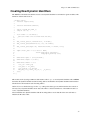
collector STORED_DATA on "bit0" {
header=<<<
#include <stdio.h>
>>>;
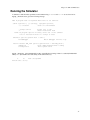
record=<<<
printf(LSE_time_print_args(LSE_time_now));
printf(": bit0=%d\n", *datap);
>>>;
};
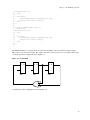
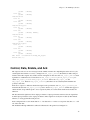
The LFSR in Example 3-1, when clocked, moves bits from the higher order state elements (delay2 being the
MSb) to the lower order state elements. The outputs of the lower-order two bits are xor-ed together and the result
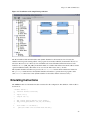
is fed back into the most significant bit (see Figure 3-1).
Figure 3-1. A 3-bit LFSR
D Q
bit2
D Q
bit1
D Q
bit0
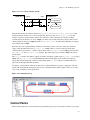
A visualization of this configuration is shown if Figure 3-2.
15