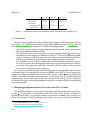
1
S. Eger
Segmentation by Enumeration (113–131)
kmin kmax
G-P-25K
E-P-25K
D-P-25K
F-P-25K
G-S-55K
E-S-15K
D-S-55K
G-M-36K
E-M-22K
1
1
1
1
1
1
1
1
1
27
20
25
18
10
7
11
9
5
G-P-25K
E-P-25K
D-P-25K
F-P-25K
G-S-55K
E-S-15K
D-S-55K
G-M-36K
E-M-22K
k̄
ξmin ξmax
ξ̄
nmin nmax
8.66 ± 2.7 1
4 1.15 ± 0.4 1
31
7.18 ± 2.3 1
4 1.17 ± 0.4 1
22
9.09 ± 3.1 1
4 1.16 ± 0.4 1
29
6.69 ± 2.3 1
4 1.27 ± 0.5 1
20
3.62 ± 1.2 1 10 3.08 ± 1.1 1
31
2.43 ± 1.1 1
9 3.20 ± 1.3 1
19
3.51 ± 1.3 1
9 3.07 ± 1.0 1
30
2.40 ± 0.9 1 21 4.17 ± 2.1 1
31
1.68 ± 0.7 1 16 4.60 ± 2.1 1
21
0.95
SA ([n̄], [k̄]) Q
E [|SA (n, k)|]
|SA (n,k)|
9
7
45
28
120
7
120
9
7
364
105
364
286
2, 710
210
2, 430
364
45
n̄
9.97 ± 3.1
8.37 ± 2.5
10.53 ± 3.5
8.50 ± 2.6
11.15 ± 3.2
7.80 ± 2.5
10.78 ± 3.3
10.01 ± 3.2
7.73 ± 2.6
465.52 ± 28, 058.0
27.55 ± 98.7
238.06 ± 4, 853.2
78.08 ± 504.8
1, 547.04 ± 56, 553.2
59.99 ± 318.2
2, 848.16 ± 75, 541.1
365.17 ± 31, 063.1
10.43 ± 30.6
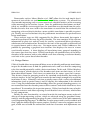
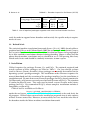
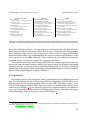
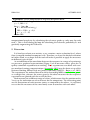
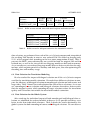
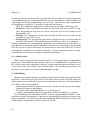
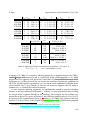
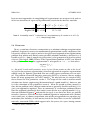
Table 2. Data sets (rows) and statistical properties. The set A is
{ξmin , ξmin + 1, . . . , ξmax }. Description in text.
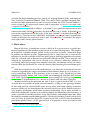
(Lafferty et al., 2001) as a sequence labeling model SL, as implemented in the CRF++
toolkit.4 Again, alternatives such as structured SVMs (Tsochantaridis et al., 2004)
might have been equally well (or better) suited but we choose CRFs because of their
reputation as yielding state-of-the art results on structured prediction problems in
NLP. For all subsequent experiments, we use linear-chain conditional random fields
with window size w (we include as features all character Ngrams that fit inside a
window of ±w around the current character).
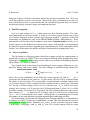
In our sequence labeling approach, we additionally consider another encoding
scheme as the one indicated in Section 1. Namely, we also experiment on encoding
the length of the segment directly in the labeling. For example, for the syllabic segmentation of phoenix as given in Section 1, this labeling would read as 01 02 03 04 101 02
to represent the segmentation phoen-ix. Bartlett et al. (2008) have claimed that this
numbered encoding scheme leads to better performance for the syllabification problem
4 Available
at http://crfpp.googlecode.com/svn/trunk/doc/index.html
119