1
exchange for the remainder of the session and to detect any tampering that may
have occurred.
Servers may optionally be configured to require client authentication as well as
server authentication. In this case, after server authentication is successfully
completed, the client must also present its certificate to the server to authenticate
the client's identity before the encrypted SSL session can be established.
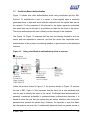
1.10. Signed and Encrypted Email
Some email programs support digitally signed and encrypted email using a widely
accepted protocol known as Secure Multipurpose Internet Mail Extension (S/MIME).
Using S/MIME to sign or encrypt email messages requires the sender of the
message to have an S/MIME certificate.
An email message that includes a digital signature provides some assurance that it
was in fact sent by the person whose name appears in the message header, thus
providing authentication of the sender. If the digital signature cannot be validated by
the email software on the receiving end, the user will be alerted.
The digital signature is unique to the message it accompanies. If the message
received differs in any way from the message that was sent — even by the addition
or deletion of a comma — the digital signature cannot be validated. Therefore,
signed email also provides some assurance that the email has not been tampered
with. As discussed at the beginning of this document, this kind of assurance is
known as non-repudiation. In other words, signed email makes it very difficult for the
sender to deny having sent the message. This is important for many forms of
business communication.
S/MIME also makes it possible to encrypt email messages. This is also important for
some business users. However, using encryption for email requires careful planning.
If the recipient of encrypted email messages loses his or her private key and does
© IDRBT, 2002
18