1
1. INTRODUCTION
®
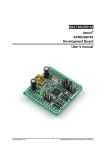
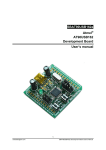
Thank you for choosing the DBAT90USB162 – Atmel AT90USB162 enhanced
development board. This board is designed to give both professionals and
hobbyists a quick start to develop code and for hardware prototyping and testing.
1.1. OVERVIEW
This document describes the DBAT90USB162 development board – a simple yet
feature rich, flexible and easily configurable development tool, designed to allow
easy coding and prototyping.
®
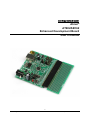
The DBAT90USB162 is an enhanced Atmel AT90USB162 development board
which also accepts AT90USB82. Offering modular design, this board is a costeffective yet feature rich, highly compatible, flexible and easily configurable
development tool, designed to give a quick start to develop code and for hardware
prototyping and testing. Its design provides configurability and flexibility not
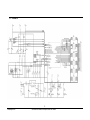
available with other products. The board provides all the basic circuitry needed to
work with AT90USB162: USB connector and circuit, crystal and clock configuration
circuitry, Reset and HWB buttons, status LED, user button and LED, power
source/voltage configuration circuitry, configurable voltage regulator, isolation
resistors to combine ISP lines with other functions. The board either accepts a
MCU directly, or uses additional header boards for MCU installation giving the
developer the freedom of using one development board with several MCUs,
eventually programmed with different code.
The board either accepts a MCU directly or uses additional header boards for MCU
installation giving the developer the freedom of using one development board with
several MCUs, eventually programmed with different code.
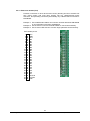
An extension header is available allowing connection of various size universal
boards such as the usually included UB100288 or breadboards holding the rest of
the circuitry, and eventually using different hardware, or direct interfacing with other
devices.
Furthermore most board components are detachable or configurable via jumpers.
The board offers flexible power: both 3.3 V and 5 V USB-powered or from external
supply. The board also features a built-in voltage regulator, configurable to 3.3 V
and 5 V with overcurrent and thermal protection.
Board design makes it compatible with virtually all design/development software
and libraries, including open source.
2
embeddedglow.com
DBAT90USB162 Enhanced Development Board User’s Manual