1
- Emission limit values prescribed by competent authority: please report the emission limit values in
your permit and with the unit, type of average and compliance criteria (i.e. percentile or other
criteria).
- Additional information: when relevant, please give information on local conditions that lead to the
current monitoring practice.
Moreover, in order to provide better insight into some specific other than normal operating
conditions, if available, the operator may attach additional information (as an annex to the
questionnaire), e.g. data excluded, graphs of the emissions, circumstances under which such a
situation occurs.
According to the kick-off meeting conclusions, data on emissions to water should not be collected for
the grain milling sector. In the case of animal feed, only those installations producing pet food and
feed for fur animals should report data on emissions to water.
3.1.6.1
"6. General info WWTP" sheet
In this sheet, contextual information for emissions to water is requested for each point of release.
Emission data for the described waste water and its treatment should be reported in sheet(s) 7.
First of all, any point of release should be specified through a drop-down list that includes three
options:
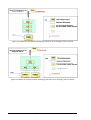
• Direct discharge to a receiving water body. This is the case when the final WWTP is included
in the FDM installation, and the discharge is carried outside (e.g. to a river, estuary, sea) (see
Figure 4).
• Indirect discharge to a WWTP. This is the case when waste water is sent to a downstream
WWTP (e.g. municipal/urban WWTP, off-site industrial WWTP) (see Figure 5).
• Landspreading.
Section 6.2 requests information about the water quantities entering (influent)/ leaving (effluent) the
final waste water treatment plant (WWTP), and the amount of water recycled/reused from the three
main parts of waste water treatment and management: 1) process-integrated techniques, 2)
pretreatment and 3) the final WWTP. Section 6.3 asks for information on the volume and dry matter
content of the sludge generated by the final WWTP. The destination of recycled/reused water can be
specified in the additional information cells.
In section 6.4, information is requested on the origin and seasonality of the waste water streams
contributing to the total volume of incoming waste water that is treated in the final waste water
treatment plant, expressed in % of the total influent of the final WWTP. This helps to understand the
main sources of emissions to water in the installation. Process waste water refers to those streams
generated from the different lines of production/process. Information on other types of waste water
streams is also asked for, e.g. cleaning water, run-off water, cooling water. If there are waste water
streams sent to the final WWTP from sources other than the FDM activity (e.g. slaughterhouse, large
combustion plant), please provide this information in section 6.4.2.
Information is requested about the implementation of the following types of technique that
contribute to the reduction of emissions to water:
• Section 6.5: management and process-integrated techniques applied at process level for
specific waste water streams before mixing them at the final WWTP
• Section 6.6: pretreatment techniques applied for specific waste water streams before mixing
them at the final WWTP (selection from a drop-down list)
13
Workshop draft version EIPPCB/FDM BREF Questionnaire User's Manual