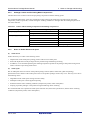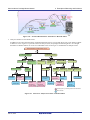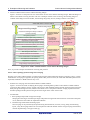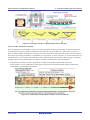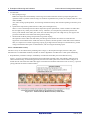
1
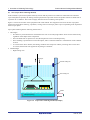
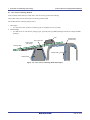
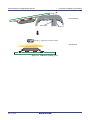
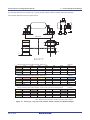
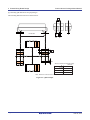
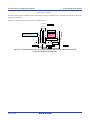
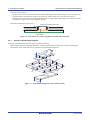
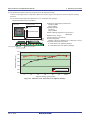
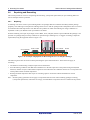
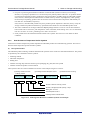
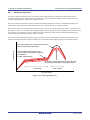
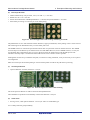
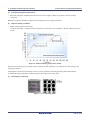
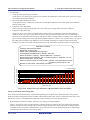
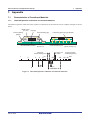
1 Overview of Soldering Technology (2) Semiconductor Package Mount Manual VPS (Vapor Phase Soldering Method) In this method, a special inert liquid is heated by a heater and the product to be soldered is immersed in the saturated vapor atmosphere acquired by the boiling of that liquid, and the vapor that contacts the product releases its latent heat of vaporation as it condenses. This results in highly efficient and even soldering of the product. Figure 1.9 shows the structure of the equipment used in this method. This equipment consists of the first vapor phase used for the batch reflow soldering, a preheater, cooling, and a second vapor phase to prevent splashing of the liquid from the first vapor phase. Vapor phase soldering has the following characteristics. 1. Advantages The efficiency with which heat is transmitted to the work is extremely high and the whole work is heated evenly regardless of the shapes of the components. Since the latent heat of vaporation is used, the temperature can be controlled precisely. Since soldering is performed in an inert atmosphere, there is minimal oxidation or contamination of the soldered sections. As a result of the above features, the heating conditions can be kept low and the processing times can be short. As a result, the thermal stress applied to the packages is minimal. 2. Disadvantages High running costs. Conveyor Second cooling coil Second vapor phase First cooling coil First vapor phase Heater Inert liquid (boiling) Figure 1.9 Vapor Phase Soldering Method (Example) Page 8 of 140 R50ZZ0003EJ0500 Rev. 5.00 Feb 03, 2015