1
BD GenomeWalker™ Universal Kit User Manual
I. Introduction
BD GenomeWalker™ DNA walking is a simple method for finding unknown
genomic DNA sequences adjacent to a known sequence such as a cDNA
(Siebert et al., 1995). BD GenomeWalker Kits (Cat. Nos. 638901, 638902, and
638903) are available for human, mouse, and rat genomes, respectively;
however, researchers who are interested in other species need a more general
approach. The BD GenomeWalker™ Universal Kit is designed with this in
mind, enabling researchers to apply this powerful method of DNA walking to the
species of their choice.
Using your genomic DNA of interest, the first step is to construct pools of
uncloned, adaptor-ligated genomic DNA fragments, which are referred to for
convenience as BD GenomeWalker “libraries.” The starting DNA must be very
clean and have a high average molecular weight, requiring a higher quality
preparation than the minimum suitable for Southern blotting or conventional
PCR. To ensure that your genomic DNA is of adequate quality, the kit includes
controls for comparison. Separate aliquots of DNA are completely digested with
different restriction enzymes that leave blunt ends. The BD GenomeWalker
Universal Kit comes with a set of four restriction enzymes; however, alternative
restriction enzymes that leave blunt ends may be substituted. Each batch of
digested genomic DNA is then ligated separately to the BD GenomeWalker
Adaptor.
After the libraries have been constructed, the protocol takes just two days and
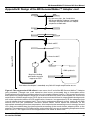
consists of two PCR amplifications per library (Figure 1). The first or primary PCR
uses the outer adaptor primer (AP1) provided in the kit and an outer, genespecific primer (GSP1) provided by the researcher. The primary PCR mixture is
then diluted and used as a template for a secondary or “nested” PCR with the
nested adaptor primer (AP2) and a nested gene-specific primer (GSP2). This
generally produces a single, major PCR product from at least three of the four
libraries (and often in all four; Figure 1). Each of the DNA fragments—which begin
in a known sequence at the 5' end of GSP2 and extend into the unknown adjacent
genomic DNA—can then be cloned and further analyzed.
The kit also provides human genomic DNA to be used as a positive control for
library construction, as well as a preconstructed BD GenomeWalker human
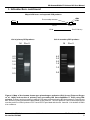
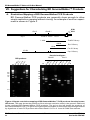
library as a positive control for PCR. Figure 2 shows typical results of primary and
secondary PCR with these positive controls. Amplification of the Pvu II
BD GenomeWalker human library with the adaptor primers and primers derived
from exon 1 of the human tissue-type plasminogen activator (tPA) gene (PCP1
and PCP2) should generate a single major product 1.5 kb in length.
Long-distance PCR with the BD Advantage™ 2 PCR Kit
BD GenomeWalker reactions should be performed with a 50X polymerase mix
containing a combination of DNA polymerases suitable for long-distance PCR
(LD PCR; Barnes, 1994; Cheng et al., 1994). In LD PCR, a combination of two
thermostable DNA polymerases is used to increase the range and accuracy of
Protocol No. PT3042-1
Version No. PR47605
www.bdbiosciences.com
BD Biosciences Clontech
3