1
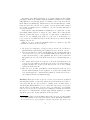
control
microcontroller
programming
interface
simulate
EEPROM
memory
brute force
password guessing
semi−/non−
invasive
invasive
attacks
attacks
replace
sensors
sensors
replace radio
chipset
radio
time
short
medium
long
very long
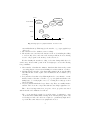
Fig. 3. Design space for physical attacks on sensor nodes.
external flash memory. This may give the attacker, e. g., cryptographic keys
of the node.
3. The attacker is able to influence sensor readings.
4. The attacker can control the radio function of the node, including the ability
to read, modify, delete, and create radio messages without, however, having
access to the program or the memory of the sensor node.
We then classifiy the attacks according to the time during which the node
cannot carry out its normal operation. In our design space, we use the following
four possibilities:
1. Short attacks of less than five minutes. Attacks in this class mostly consist
of creating plug-in connections and making a few data transfers over these.
2. Medium duration attacks of less than thirty minutes. Most attacks which
take this amount of time require some mechanical work, for instance (de-)
soldering.
3. Long attacks of less than a day. This might involve a non-invasive or semiinvasive attack on the microcontroller, e. g., a power glitch attack where the
timing has to be exactly right to succeed, or erasing the security protection
bits by UV light.
4. Very long attacks which take longer than a day. These are usually invasive
attacks on the electronic components with associated high equipment cost.
Three other, less important from our point of view, properties associated
with an attack can be illustrated as follows:
– The cost an attacker is required to spend in terms of equipment to carry
out an attack successfully: This can range from extremely cheap, where only
a soldering iron and some cables are required, to prohibitively high, where
top-of-the-line semiconductor test equipment is needed.
7