1
NETGEAR ProSAFE VPN Client
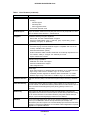
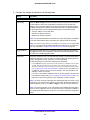
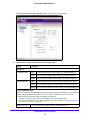
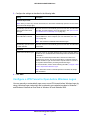
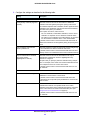
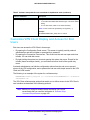
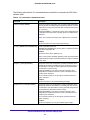
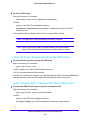
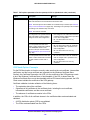
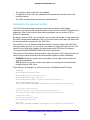
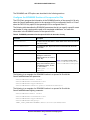
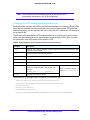
Table 1. List of features (continued)
Feature
Specifications
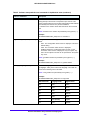
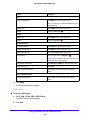
NAT Traversal
•
•
NAT Traversal Draft 1 (enhanced), Draft 2, and Draft 3 (full implementation),
including:
- NAT OA support
- NAT keep-alive
- NAT-T aggressive mode
Forced NAT-Traversal mode
SIP/VoIP support
Support for Session Initiation Protocol (SIP) and Voice over IP (VoIP) traffic in a VPN
tunnel on Window Vista, Windows 7, and Windows 8.
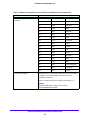
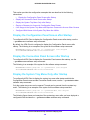
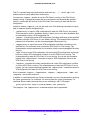
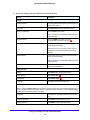
Encryption
Provides the following encryption algorithms:
• 3DES, DES, and AES 128/192/256-bit encryption
• Support for Diffie-Hellman group 1 (768 bits), group 2 (1024 bits), group 5
(1536 bits), and group 14 (2048 bits)
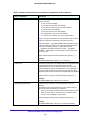
User authentication
Supports the following user authentication methods:
• Pre-shared keying and X509 certificate support. Compatible with most of the
currently available IPSec gateways.
• Extended authentication (AUTH).
• Flexible certificates: PEM, PKCS#12 certificates can be directly imported from the
user interface. Ability to configure one certificate per tunnel.
• Hybrid authentication method.
Certificate storage capabilities:
• USB token and smart card support
• Personal Certificate Store support
• VPN configuration file
Remote login:
• Gina mode supported on Windows 2000 and Windows XP to enable Windows
logon using a VPN tunnel or enable to log in on a local machine.
• Credential providers supported on Windows Vista and Windows 7 to enable
Windows logon using a VPN tunnel or enable to log in on a local machine.
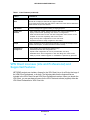
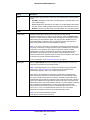
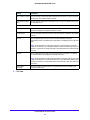
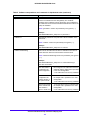
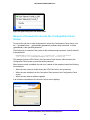
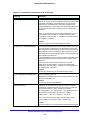
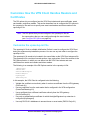
Dead Peer Detection
Dead Peer Detection (DPD) is an IKE extension (RFC3706) for detecting a dead IKE
peer.
Redundant Gateway
The Redundant Gateway feature provides a highly reliable secure connection to a
corporate network. The Redundant Gateway feature allows the VPN Client to open an
IPSec tunnel with an alternate gateway if the primary gateway is down or not
responding.
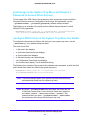
Mode Config
Mode Config is an IKE extension that enables the VPN gateway to provide LAN
configuration to the remote user’s machine (that is, the VPN Client). With Mode Config,
you can access all servers on the remote network by using their network name (for
example, \\myserver\marketing\budget) instead of their IP address.
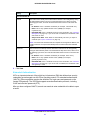
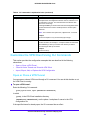
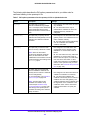
USB drive
You can save VPN configurations and security elements (certificates, pre-shared key,
and so on) to a USB drive to remove security information (for example, user
authentication) from the computer. You can automatically open and close tunnels when
plugging in or removing the USB drive. You can attach a VPN configuration to a specific
computer or to a specific USB drive.
Introduction
9