1
MULTIPOLE CONNECTORS ❱ Crimping tools ❱ CN
i
Crimping tools
Tools and accessories for crimp contacts
Selecting the crimping tool and relevant controls
Crimping tools
When you have selected quality crimp contacts and conductors, the
next step and most important step is to select the correct work tool.
The practical guide of standard EN 60352-2 provides the following
recommendations on the subject. They list some of the ideal
requirements for crimping tools, some optional characteristics, but,
above all, they provide a preview of the indispensable controls:
a) The crimping tools and the contacts used must be supplied by the
same manufacturer, otherwise the user must assume all
responsibility for the quality and reliability of the crimp connections.
b) The crimping tools must function correctly and provide a correct
crimp without damage to the pin or the component to crimp.
c) In order to obtain a reliable crimp connection, a crimping device
with a mechanism that controls the entire crimping cycle must be
used. At the end of the crimping cycle the handles and the
ratchet must return to the open position.
d) In all cases the crimping operation must be made in one single
phase, with no further interventions.
e) The removable parts of the tool such as the crimping dies and
the
locators must be designed in such a way as to make it
possible to be inserted within the tool only in the correct manner.
f) The tools must be supplied with the appropriate means for a
correct positioning of the pins to be crimped and of the
conductors during crimping.
g) The tools must be designed in such a way so that only the
necessary adjustments may be made.
h) The action of the tool must be such that both the pin to be
crimped and the fixture of the isolation (when present) are
respectively crimped or compressed with a single action.
i) The design of the tool must ensure that the dies for a particular
tool may be interchangeable within tools of the same type.
If they are not interchangeable, the identification of tools for
which they are suitable must be marked on the dies.
j) The tools may be designed so as to produce a marking or coding
of the die on the pin to be crimped so that the crimping may be
checked for verification of the correct die.
k) The design of the tool must allow the verification of the dies with
gauges to measure wear. The gauge verification method must be
that specified by the manufacturer of the tools.
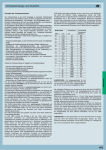
With suitable flexible copper conductors, the crimping tool proposed
by ILME gives 8 impression crimp (see figure) in conformity with
standard EN 60352-2. Periodic control of the wear of the crimping
matrixes can be carried out with the appropriate "go - no go"
gauges (purchased separately). For extra operational details,
consult the following pages on tools, and the relevant instruction
sheets and/or use and maintenance manuals.
532
The manual and automatic crimping tools selected by ILME are
carefully designed to ensure symmetrical deformation of the
crimping area of the contact and wire, by means of their own,
internal high pressure forming parts. The positioner ensures that the
wire and crimp contact meet in the appropriate part of the tool.
Sprung mechanisms built into the tools ensure that the contacts are
not inserted in the tool before the indenters are fully open, and that the
tool does not open before the crimping process has been completed.
The CCPZ MIL (for 10A and 16A crimp contacts) and CXPZ D (for 40A
crimp contacts) manual crimping tools are suitable for use when
compressed air sources are unavailable, for low or medium-low work loads.
The CCPZ RN (for 10A, 16A and 40A crimp contacts) manual
crimping tool is also suitable for for low or medium-low work loads.
The CCPZP pneumatic crimping bench tool without automatic
positioner (for 10A and 16A crimp contacts) is suitable for use in the
workshop (where compressed air is available) for high or
medium-high work loads. Using the same manual crimping tool
turrets it is possible to change rapidly from crimping on male contacts
to crimping on female contacts of the same series (10A and 16A).
The CCPZPA pneumatic crimping bench tool with automatic positioner
(for 10A and 16A crimp contacts) is suitable for workshop jobs (where
compressed air is available) for medium-high or high work loads. It is
recommended in particular for crimping high quantities of contacts that
are the same type or have the same section, thus saving a significant
amount of time thanks to automatic operation and reduced operator
fatigue. Where the type or kind of contact must be changed frequently,
it is preferred to use the version without automatic positioner.
The CXPZP D pneumatic crimping bench tool without automatic
positioner (for 40A crimp contacts) is suitable for use in the
workshop (where compressed air is available) for high or
medium-high work loads. By using the same positioners as those of
manual crimper CXPZ D, the size of a contact can be rapidly
changed with one of the same type. However, the positioner must
be changed in order to change over from male to female contacts.
The semiautomatic stripping-crimping machine, type ZFU-CD, is
suitable to be used in workshops (where an electrical or pneumatic
power supply is available) and for heavy work loads. It enables to
produce large amounts of crimped connections in less time
because of the possibility of simultaneously carrying out stripping
and crimping operations. The contact and tool replacement
operations, which are minimized because of the preset programs
that can be stored and customized by the user, require the
production to be programmed to reduce downtime. When a
sequential processing is required despite the economic advantages
offered by the above-described solution, it is preferable to use
pneumatic bench pliers without the above-described positioner or
one of the manual pliers
In any case, the quality of the results from the crimping tools,
combined with the ILME crimp contacts, is identical and at the
highest market levels, exceeding the requirements of the standard
EN 60352-2.
Although the crimping appliances and tools suggested here include
a set of control automatisms and mechanisms, which prevent the
chief misunderstandings and errors, the operator is advised to
always take care not to work in inappropriate conditions.