1
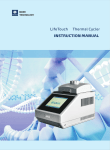
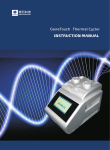
Instruction Manual of GeneMax Thermal Cycler
CHAPTER I INTRODUCTION
The contents in this chapter include introduction of PCR technology, examples of PCR application, introduction of
Thermal Cycler and features of GeneMax Thermal Cycler.
1.1 Introduction of PCR technology
Polymerase chain reaction (PCR) is a nucleic acid amplification that simulates natural DNA replication in vitro. It takes 2 DNA
chains to be amplified as template, uses a pair of artificially synthesized oligonucleotide primer as mediator, and amplifies certain
DNA fragment quickly and specifically by thermostable DNA polymerase. Ever since PCR technology was invented by Mullis in
1985 and thermostable DNA polymerase was discovered by Erlich in 1988, this simple, fast, specific and sensitive technology
has been widely applied to life science areas at astonishing speed. Remarkable achievements have been witnessed in cytology,
virology, oncology, genetic disease, forensic medicine, animal/plant immunology and etc. It is a milestone in contemporary
molecular biology development.
1.2. Example of PCR technology application scope
1
Research:
Gene clone, dna sequencing, mutation analysis, gene recombination and fusion, protein-regulating dna
sequence identification, transposition insertion site mapping, genetic modification detection, synthetic
gene construction, clone construction, carrier expression, certain gene’s incision enzyme diversity
detection and etc.
Clinical diagnosis:
Bacteria (spirochete, mycoplasma, chlamydia, mycobacterium, rickettsia, diphtheria bacillus, pathogenic
e. Coli, dysentery bacillus, aeromonas hydrophilic and c. Difficile and etc.); Virus (htlv, hiv, hbv, hcv, hpvs,
ev, cmv, ebv, hsv, measles virus, rotavirus, parvovirus b19 and etc.); Parasite (malaria and etc.); Human
genetic disease (lesh-nyhan syndrome, mediterranean anemia, hemophilia, bmd, dmd, cystic fibrosis
and etc.)
Immunology:
HLA typing, T cell receptor or antibody diversity qualification, autoimmune disease gene mapping,
lymphokine quantification and etc.
Human genome
project:
DNA mark generated from scatter repetitive sequence, genetic map construction (detect DNA,
polymorphism, sperm drawing), physical map construction, sequencing, expression map and etc.
Forensic medicine:
Crime scene specimen analysis, hla-dqα analysis and etc.
Oncology:
Pancreas cancer, rectal cancer, lung cancer, thyroid cancer, melanin cancer, hematological malignant
tumor and etc.
Histology/population
biology:
Genetic cluster research, evolution research, animal protection research, ecology, environmental science,
experimental genetics and etc.
Paleontology:
Archeology and museum specimen analysis and etc.
Botany/zoology:
Animal inflectional disease diagnosis, plant pathogen detection and etc.