1
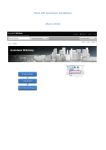
Figure 49. Web realm document
5.2.3 Secure Sockets Layer
Secure Sockets Layer (SSL) is a security protocol that provides
communications privacy and authentication for Domino server tasks that
operate over TCP/IP.
The TCP/IP protocol forms the underlying foundation for scalable Internet
communications. Unfortunately, TCP/IP is, by its very nature, unsecured.
However, using the SSL protocol in conjunction with TCP/IP brings
reasonable first-level security to this previously unsecured environment.
Perhaps the most important function that SSL brings to standard TCP/IP and
HTTP sessions is the ability to mutually authenticate servers and clients. By
enabling SSL, you can establish trusted relationships between clients and
servers using certificates and digital signatures. While this ability has long
been available to Notes users, it was a ground breaking development in
security across TCP/IP.
The Domino server is capable of providing a very similar type of
authentication for browser clients as it does for Notes clients using SSL and
X.509 certificates. These certificates are stored in the user's Web browser as
well as on the server. While these provide a secure way of authenticating with
the server, they tend to be a high maintenance solution and may be
expensive to implement if you intend to use third-party certification to protect
both the user and the server from each other. (Several companies offer this
service, including Verisign and GlobalSign).
For many sites, the level of security offered by X.509 certificates and SSL is
not necessary. These sites can use “basic authentication,” which simply
Chapter 5. Portal security
91