1
• General method: Vinh and von Haeseler (2004) IQPNNI: Moving fast through tree
space and stopping in time, Mol. Biol. Evol. 21(8):1565-1571
http://dx.doi.org/10.1093/molbev/msh176dd
• MPI parallelization: Minh, Vinh, von Haeseler and Schmidt (2005) pIQPNNI - parallel
reconstruction of large maximum likelihood phylogenies. Bioinformatics 21(19):37943796
http://dx.doi.org/10.1093/bioinformatics/bti594
• OpenMP and hybrid MPI/OpenMP parallelization: Minh, Vinh, Schmidt and von
Haeseler (2006) Large maximum likelihood trees. In Proceedings of the 3rd NIC Symposium 2006, pp. 357–365, Forschunungszentrum Jülich, Germany.
http://www.fz-juelich.de/nic-series/volume32/minh.pdf
• Inference of positive selection: please cite this manual.
3
Main features
• Reconstructing maximum likelihood tree on DNA or protein alignment.
• Supporting various substitution models for nucleotide, amino-acid, and codon w/o rate
heterogeneity.
• (NEW in ver. 3.3, see Section 4.1) Resampling the alignment once by non-parametric
bootstrap and constructing an ML tree from the resampled alignment.
• Providing parallel version with MPI and OpenMP.
• Inferring positively selected sites on protein-coding alignment.
• Inferring site-specific rates under Gamma, Gamma+Invar, or Meyer and von Haeseler
model.
• Evaluating a user-defined tree.
4
Command-line options
Since version 3.0, users can specify parameters through a set of command-line options, which
are extremely useful to start a batch job. Run ‘iqpnni -h’ to print out a short description
of available options:
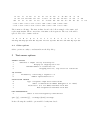
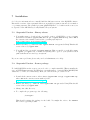
WELCOME TO IQPNNI 3.3 (sequential version)
Syntax: iqpnni [OPTIONS] [Filename]
3