1
Defrosting method
Important points to check after
commissioning
Check that the fan runs in the right direction. The air should be blown
upwards through the fan.
FOR THE INSTALLER
For the heat pump to perform at its best, it is important to check the flow
on the hot side of the heat pump. Usually, the heat carrier pumps have a
speed selector switch. This must be set correctly for the pressure drop in
the system. A recommended temperature difference across the heat pump
on the hot side is between 5-10ºC. The nominal flows provided in Technical
information show a difference of 7ºC in operating mode +7/45ºC. Check
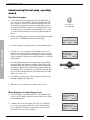
this by going to the menu display 3 and reading the sensors T9 (GT9) and
T8 (GT8).
When commissioning is carried out at a low outdoor temperature (below
0ºC) the temperature difference should be between 5ºC and 7ºC.
It is also important that the flow in the heating system exceeds the flow
across the heat pump. If this is not the case, the heat pump flow goes back
via the bypass to the heat pump return, which may cause the heat pump
to trip for high return temperature. The flow through the heating system
should be sufficient to keep the whole radiator warm and thereby increase
the heat emitting surface. This means that the flow temperature from the
heat pump is kept low.
After testing, vent the system again and top up with cold water if necessary.
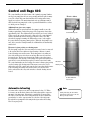
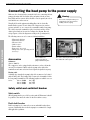
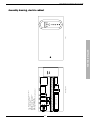
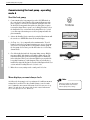
Sight glass
Sometimes when the heat pump has started you can see the fluid in the
refrigerant circuit bubble for a few minutes in the sight glass. This is
completely normal. If there are bubbles present all the time, this is a fault
symptom which is probably due to insufficient refrigerant.
If the sight glass indicates green this means there is no moisture in the
system. If it is yellow there is moisture in the system.
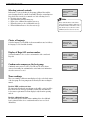
Defrosting method
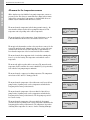
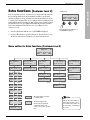
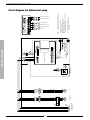
The principle of defrosting in the heat pump is known as hot gas defrosting. During defrosting, the flow in the refrigerant circuit is reversed by
means of an electrically-controlled four-way valve. The compressed gas
from the compressor is fed into the top of the evaporator, causing the ice
on the outside to melt. During this process, the water in the radiators
is cooled slightly. The defrosting process is controlled by a defrosting
module. The module measures the temperature of the refrigerant with
the help of a sensor. Hot gas is sprayed into the evaporator and the sensor
ensures that the process functions correctly. The time required for defrosting depends on the amount of ice and the outdoor temperature. The
sequence is explained below:
62
Sight glass