1
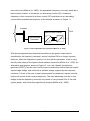
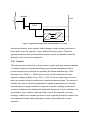
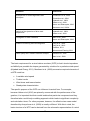
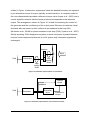
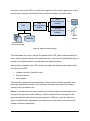
Motivation References Development of control algorithms and techniques Teodorescu et al., 2003 Chinchilla et al., 2004 Kojabadi et al., 2004 Rabelo et al., 2004 Moore and Ekanayake, 2010 Munteanu et al, 2010b Analysis of the dynamics of drive train components Kojabadi et al., 2004 Helsen et al., 2010 Investigation of fault conditions Mauri et al., 2008 Moore and Ekanayake, 2010 Condition monitoring and fault diagnosis Yang et al., 2008 Yang et al., 2010 Crabtree, 2011 Johnson and Fleming, 2011 Power quality and network transient analysis Seman et al., 2005 Mauri et al., 2008 Table 3: Motivations for the use of wind turbine emulators The basic requirement for a wind turbine emulator (WTE) is that it should reproduce as faithfully as possible the torque generated by a turbine for a particular wind speed (Kojabadi and Chang, 2011). Monfared et al. (2008) summarise required elements of a WTE model as: A variable wind speed Turbine inertia Wind shear and tower shadow Steady state characteristics The specific purpose of the WTE can influence its actual form. For example, because Helsen et al (2010) are primarily concerned with the performance of the gearbox, it is important that their model isolates that particular component and they therefore take a multi-body modelling approach which leads to significant complexity and calculation times. For other purposes, however, the effective two-mass model described by Anaya-Lara et al. (2009) is usually sufficient. With this in mind, the basic structure of a WTE can be derived from the schematic representation of a wind 35