1
User Manual – 56800 Family IEEE-754 Compliant Floating-Point Library
Section 1. User Guide
1.1 Introduction
This document presents an implementation of floating-point arithmetic
as described in [1]. The following floating-point routines for the 56800
device family are implemented (see also [1] and [2] for detailed
description of their functionality):
1. Basic floating-point operations: addition, subtraction,
multiplication, division
2. Conversion to and from integer (16-bit and 32-bit) and
floating-point format, both round-to-nearest-even and toward-zero
versions
3. Comparison functions
4. Rounding functions: floor, ceil, round, trunc, rint
5. Function for controlling floating-point state as defined in [2]:
getround, setround, testexcept, getexceptflag,
setexceptflag, clearexcept
Floating-point functions are provided in the form of libraries and source
code, both C and assembly.
The implementation is prepared for use with the CodeWarrior compiler.
The release contents are divided into a few folders as follows:
•
...\examples - contains operational examples of use of the
software
•
•
...\lib - contains floating-point libraries for immediate use
...\proj - contains CodeWarrior project needed for re-build of
all libraries
...\src - contains all source files
•
RCSL FP 1.0 — Rev. 0.4
Freescale
56800 Family IEEE-754 Compliant Floating-Point Library
User Guide
1
User Guide
The implementation demonstrates a good balance between functionality
and performance, and for this reason does not strictly follow the
floating-point standard described in [1]. In particular, the implementation
provides a few library variants, each of them differing in compliance level
to the standard [1].
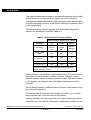
The different library variants together with supported floating-point
features are described in the table Table 1-1
Table 1-1 Floating-Point Library Variants
Library Variants (library tag is shown)
Features
fast
balan
advan
Rounding
unspecified/
round to
zero
round to
nearest
even
directed
rounding
Non-numerical
values
NO†
NO†
YES†
Floating-point
state bits
NO
NO
NO
Exception/Traps
NO
NO
NO
Sub-normals
YES
YES
YES
†
feature customizable, can be switched on or off depending on
defined assembler macros
Different library variants differ in speed performance. The variant fast is
the fastest, the variant balan is slower, however it exhibits a good
balance between speed, accuracy and functionality. The advan variant
is the slowest one, however offers the highest conformance to the
standard.
Due to defined features of different library variants, some functions may
have limited functionality.
For example the directed float-float rounding function (rint) rounds
always toward zero in the fast variant of the library.
Another example - the fast variant does not support rounding mode in a
consistent way. For addition, subtraction, multiplication and division the
56800 Family IEEE-754 Compliant Floating-Point Library
2
User Guide
RCSL FP 1.0 — Rev. 0.4
Freescale
User Guide
Usage
rounding mode may vary from operation to operation resulting in an error
of 1 ulp. For other operations (floating and integer conversions) the
round-to-zero rounding mode is used (see 1.4.6 Rounding for more
details).
NOTE:
A detailed discussion regarding use of the different floating-point
features imposed by the IEEE-754 standard [1] is beyond the scope of
this document and will not be provided. However, users are reminded
that this subject is non-trivial. It is recommended that users familiarize
themselves with the appropriate literature in order to use all such
features correctly (see [3]).
1.2 Usage
The floating-point libraries should be used by adding a floating-point
library to a CodeWarrior project. The CodeWarrior linker will link the
project compiled binaries against the added library.
The library files are located in ...\lib folder. The libraries names are
composed as follows:
• fplib_<library tag>
where:
•
•
fplib_ is a library identifier
<library tag> is one of the library tags as shown in Table 1-1
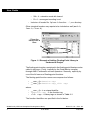
An example of how to add a floating-point library to a CodeWarrior
project is shown in Figure 1-1. An operational example demonstrating
use of the provided floating-point libraries can be found in the
...\examples folder.
The CodeWarrior linker may report warnings about ambiguous symbols
if a floating-point library from the CodeWarrior release is used. If such
behaviour is not acceptable the floating-point library from the
CodeWarrior release should be removed from the project.
To run correctly, the floating-point libraries require the following:
•
RCSL FP 1.0 — Rev. 0.4
Freescale
Appropriate setting of the OMR register:
56800 Family IEEE-754 Compliant Floating-Point Library
User Guide
3
User Guide
– SA = 0 - saturation mode bit cleared
– R = 0 - convergent rounding is set
•
Inclusion of header file: fpieee.h from the....\src directory
Other standard headers may require to be included as well (math.h,
fenv.h, float.h).
Place the
library files in
here.
Figure 1-1 Example of Adding Floating-Point Library to
Codewarrior Project
The floating-point routines contained in the floating-point libraries can be
called in two ways. Firstly, implicitly by the CodeWarrior compiler
through ANSI C arithmetic and cast operators. Secondly, explicitly by
use of the full names of floating-point functions.
The floating-point function names are composed as follows:
• __rznv_fp<function tag>
• __rznv_fp<function tag>_<lib. tag>
where:
•
•
•
__rznv_fp - is a unique identifier
<function tag> - is the function tag
<lib. tag> - is library tags as shown in Table 1-1
The function identifiers are specified in the list below:
56800 Family IEEE-754 Compliant Floating-Point Library
4
User Guide
RCSL FP 1.0 — Rev. 0.4
Freescale
User Guide
Usage
•
•
•
•
•
•
•
addf, subf, mulf, divf - addition, subtraction, multiplication,
division
ftos, ftous, ftol, ftoul - conversion of floating-point number
to respectively signed short, unsigned short, signed long,
unsigned long, toward-zero rounding mode
ftosr, ftousr, ftolr, ftoulr - conversion of floating-point
number to respectively signed short, unsigned short, signed long,
unsigned long, directed rounding mode
stof, ustof, ltof, ultof - conversion of integer number,
respective signed short, unsigned short, signed long, unsigned
long to floating-point number
gtf, gef, ltf, lef, eqf, nef - comparisons, respectively
greater, greater equal, lower, lower equal, equal, not equal, the
order of arguments is defined as follows: __rznv_fp<function
tag>(x,y) = x op y, where op is an ANSI operator
corresponding to a comparison function
floorf, ceilf, roundf, truncf, rintf - rounding functions,
respectively round down, round up, round to nearest even, round
toward 0, directed rounding (according to set rounding mode)
getround, setround, testexcept, getexceptflag,
setexceptflag, clearexcept - function controlling
floating-point state (see [2]), the standard names ([2]) are
supported too
It should be noticed that creation of symbol names can be customized
as described in 1.3 Advanced Features.
The library user should pay attention to the following comments about
library use.
All functions have been designed to execute as fast as possible in the
presence of normalized number as input arguments. In the case where
sub-normal numbers are supplied, the execution time may be longer. In
any case it should be noted that a frequent appearance of sub-normal
numbers in floating-point computation may indicate that an implemented
algorithm needs some refinement.
The binaries contained in the provided libraries do not contain symbolic
information and are not suitable for debugging. A user wishing to debug
RCSL FP 1.0 — Rev. 0.4
Freescale
56800 Family IEEE-754 Compliant Floating-Point Library
User Guide
5
User Guide
the floating-point library functions will have to re-build the libraries with
the use of the CodeWarrior project located in the ...\proj directory.
1.3 Advanced Features
The package provides several advanced features, which can be utilized
in order to customize package functionality to specific needs.
All files containing assembly source code of floating-point functions
include before any other statements two files: fpopt_all.asm and
fpopt_<library tag>.asm, where <library tag> is a library
identifier (on of fast, balan, advan). These files must be accessible
during compilation and are intended to contain some defines (the
DEFINE directive) for conditional compilation.
The following defines may be used:
•
•
•
CWDFTLIB - the library tag (fast, balan or advan) of a library
variant containing compiler implicit symbols for floating point
operations, if all is defined, then all library variants will contain
the implicit symbols, if CWDFTLIB does not contain any of all,
fast, balan or advan, no library variant will contain implicit
compiler symbols. In this case the word none is preferred.
DFTLIB - the library tag of a library variant containing the default
symbols names (fast, balan or advan), if all is defined then
all library variants will contain the default symbols, if DFTLIB does
not equal to one of: all, fast, balan or advan, no library variant
will contain the default symbols names. In this case the word none
is preferred.
NONNUM - if defined, will cause for all floating-point functions to
handle properly the non-numerical values like infinity and nan, if
not defined, non-numerical values will be treated as described in
1.4.2 Non-numerical Values.
56800 Family IEEE-754 Compliant Floating-Point Library
6
User Guide
RCSL FP 1.0 — Rev. 0.4
Freescale
User Guide
Supported IEEE-754 Features Description
1.4 Supported IEEE-754 Features Description
1.4.1 Format
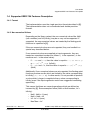
The implementation uses the single-precision format described in [1].
The implementation does not use extended and double precision
formats.
1.4.2 Non-numerical Values
Depending on the library variant, the non-numerical values like: NaN
(not a number) and Inf (infinity) may be or may not be supported. If
supported, the non-numerical values are treated by the floating-point
functions as specified in [1].
If the non-numerical values are not supported, they are handled in a
special way described below:
If non-numerical values are supplied as input arguments, they are
treated as normalized numbers as follows ( e is the exponent, f is the
mantissa and v is the actual value):
•
•
if e = 255 and f = 0 , then the value is equal to v = ( – 1 ) s ⋅ 2128 ⋅ ( 1 ⋅ f )
or v = ( – 1 ) s ⋅ 2 128 ⋅ ( 1 ⋅ 0 ) (Infinity)
if e = 255 and f ≠ 0 , then the value is equal to v = ( – 1 )s ⋅ 2 128 ⋅ ( 1 ⋅ f )
(NaN)
Additionally if non-numerical values are not supported, the floating-point
functions produce results which are limited by the value corresponding
to infinity ( ( – 1 ) s ⋅ 2 128 ⋅ ( 1 ⋅ 0 ) ). In other words, it is not possible to produce
a value which is larger in magnitude than a value corresponding to
infinity (even if the input arguments would have suggested something
oppositely).
This means that there are several operations which are defined as
incorrect by [1]. Some examples follow (NaN =a NaN number, Inf =
Infinity):
•
•
•
•
RCSL FP 1.0 — Rev. 0.4
Freescale
NaN - NaN = 0 (zero)
NaN + NaN = Inf
Inf - Inf = 0 (zero)
Nan*Nan = Inf
56800 Family IEEE-754 Compliant Floating-Point Library
User Guide
7
User Guide
If non-numerical values are not supported, the result of division by zero
is computed in a special way. In case the denominator is zero, and the
numerator is not zero (can be a number, infinity or NaN), the result will
be infinity with the sign computed according to provided arguments. In
case the denominator is zero and the numerator is zero, the result will
be zero with appropriate sign resulting from the division arguments.
1.4.3 Floating-point State
Currently floating-point state is not supported.
1.4.4 Sub-normal Values
The sub-normal values are supported by all library variants.
It is not possible to let the floating-point functions treat the sub-normal
values in a different way (for example as zero, so called
flushing-to-zero).
1.4.5 Exceptions/Traps
Exception/traps handling is currently not supported. As limited workaround one may use functions handling non-numerical behaviour
provided in the file fpnonnum_56800.h.
1.4.6 Rounding
The implementation uses different rounding depending on the
floating-point library variant (see Table 1-1).
1.4.6.1 The fast variant
All routines provided by the balan and advan variants exhibit consistent
rounding modes. The fast variant, in opposite, does not support rounding
in a consistent way, which means that depending on arguments and
result the actually used rounding mode may vary. Thus the results of
computations performed by functions may differ by 1 ulp from a correct
value.
For addition, subtraction, multiplication and division the rounding mode
is unspecified.
56800 Family IEEE-754 Compliant Floating-Point Library
8
User Guide
RCSL FP 1.0 — Rev. 0.4
Freescale
User Guide
Known Issues
For other functions the round-toward-zero rounding mode is used.
1.4.6.2 The balan variant
All applicable functions follow round-to-nearest-even rounding mode.
For rounding to the nearest even number, the implementation uses the
56800 device hardware function of convergent rounding. It means that
the rounding behaviour of the floating-point library function will follow the
56800 device rounding mode bit in the OMR register.
1.4.6.3 The advan variant
The advan variant support various rounding modes (toward zero, toward
plus/minus infinity, to nearest even).
The rounding mode can be set by the floating-point state control
functions ([2]).
With exception of implicit float-to-integer conversions, all functions follow
the defined rounding mode.
The implicit float-to-integer conversions follow the toward-zero rounding
mode. If round-to-nearest even rounding mode is required, the user is
advised to use the appropriate variant of conversion functions (with the
suffix r: ftosr, ftousr, ftolr, ftoulr) by explicit calls.
1.5 Known Issues
For computing floating-point comparison condition flags the compiler
generates the function ARTFCMPF32. The compiler does not use
specialized comparison functions (like ARTGEF32, ARTGTF32 ... etc.).
As a result, for the advan variant of the library, the condition flags may
be set incorrectly for the arguments being NaN or infinity. In order to
assure that any comparison is made correctly, it is necessary to make
an explicit call to a specialized comparison function, for example instead
of writing a statement like this if(a<b){...} (the < operator is used)
it is necessary to write if(__rznv_fpltf_advan(a, b)){...}.
RCSL FP 1.0 — Rev. 0.4
Freescale
56800 Family IEEE-754 Compliant Floating-Point Library
User Guide
9
User Guide
1.6 Bibliography
1. ANSI/IEEE Std. 754-1985 IEEE Standard for Binary Floating-Point
Arithmetic
2. ISO/IEC 9899:1999 Programming languages - C
3. What Every Computer Scientist Should Know About Floating-Point
Arithmetic David Goldberg ACM Computing Surveys, Vol 23, No 1,
March 1991
56800 Family IEEE-754 Compliant Floating-Point Library
10
User Guide
RCSL FP 1.0 — Rev. 0.4
Freescale
Floating-Point Function Summary
Execution Times
Section 2. Floating-Point Function Summary
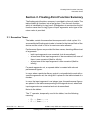
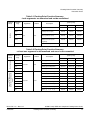
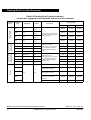
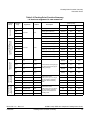
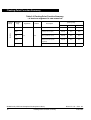
The floating-point functions summary is provided in a form of a table. The
table divides all functions into a few groups. Then for each function,
which is identified by its tag (see 1.2 Usage how to construction the full
function name from its tag), types of input arguments and a type of the
return value is provided.
2.1 Execution Times
The tables contain the execution time expressed in clock cycles. It is
assumed that all floating-point code is located in the internal flash of the
device and the clock is set to its maximum value allowed.
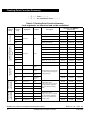
Performance figures are provided for three cases, denoting different set
of arguments:
•
•
•
both input arguments are numerical (not de-normalized)
at least one of the input arguments is de-normalized, but none of
them is non-numerical (NaN or infinity)
at least one of the input argument is non-numerical (NaN or
infinity)
For each arguments set, a separate table is created with relevant
performance figures.
In case, when a particular library variant is not predicted to work with a
specific arguments set, the string N/A is placed in the table instead of a
number.
In case, the input argument is an integer type, the performance figures
are placed in the table corresponding to the arguments set, when both
input arguments are numerical and not de-normalized.
Notes to the tables:
The “?” operator, temporarily used in the tables, has the following
meaning:
•
•
RCSL FP 1.0 — Rev. 0.4
Freescale
if x = y , then x ? y = 0
if x > y , then x ? y = 1
56800 Family IEEE-754 Compliant Floating-Point Library
Floating-Point Function Summary
11
Floating-Point Function Summary
•
•
if x < y , then x ? y = 2
if x, y are unordered, then x ? y = 3
Table 2-1 Floating-Point Function Summary
- both arguments are numerical and not de-normalized
Conversion from
float to integer
tround-oward-zero
Conversion from
float to integer
roune-to-nearest
Conversion from
integer to float
Comparison
Compares two floating-point
number by an C operator and
returns
Basic functions
Function
Group
Function
Tags
Arguments
Return
Description
fast
balan
advan
Floating-point addition
902/1028
1001/1206
1069/1359
Floating-point subtraction
945/1071
1044/1249
1183/1402
mulf
Floating-point multiplication
873/873
975/1015
1114/1168
divf
Floating-point division
1217/1217
1305/1331
1444/1645
cmpf
cmpf(x,y) = (x ? y)
217/273
217/252
273/280
cmpef
cmpef(x,y) = (x ? y)
217/273
217/252
273/280
gtf
gtf(x,y) = (x > y)
216/272
216/244
272/272
gef(x,y) = (x >= y)
216/272
216/244
272/272
ltf
ltf(x,y) = (x < y)
216/272
216/244
272/272
lef
lef(x,y) = (x <= y)
216/272
216/244
272/272
eqf
eqf(x,y) = (x == y)
216/272
216/244
272/272
nef
nef(x,y) = (x != y)
216/272
216/244
272/272
452/509
424/481
535/606
125/125
104/425
139/557
283/283
262/262
290/290
140/140
119/240
147/268
431/488
431/488
459/516
104/104
104/432
139/467
262/262
262/262
290/290
119/119
119/240
147/268
98/422
98/422
422/422
408/408
408/408
408/408
530/593
530/586
530/683
523/615
523/608
523/705
addf
subf
float, float
float
gte
float, float
short
stof
float
signed
short
ustof
float
unsigned
short
ltof
float
signed
long
ultof
float
unsigned
long
ftosr
signed short
float
ftousr
unsigned short
float
ftolr
long
float
ftoulr
unsigned long
float
ftos
signed short
float
ftous
unsigned short
float
ftol
long
float
ftoul
unsigned long
float
Conversion from an integer type
(as shown in argument type) to
floating point type
Conversion from the
floating-point type to an integer
type (as shown in argument
type) with directed rounding
mode
Conversion from the
floating-point type to an integer
type (as shown in argument
type) with round-toward-zero
rounding mode
56800 Family IEEE-754 Compliant Floating-Point Library
12
Execution Time MIN/MAX
[clock cycles]
Floating-Point Function Summary
RCSL FP 1.0 — Rev. 0.4
Freescale
Floating-Point Function Summary
Execution Times
Table 2-1 Floating-Point Function Summary
- both arguments are numerical and not de-normalized
Rounding
Function
Group
Function
Tags
Arguments
Return
Description
Execution Time MIN/MAX
[clock cycles]
fast
balan
advan
roundf
Round to nearest even
276/276
276/276
304/304
floorf
Round down (rounded number
is always less or equal)
276/276
276/276
304/304
Round up (rounded number is
always greater or equal)
276/276
276/276
304/304
truncf
Round toward 0 (rounded
number is less or equal in
magnitude)
276/276
276/276
304/304
rint
Directed rounding
297/297
297/297
361/397
ceilf
float
float
Table 2-2 Floating-Point Function Summary
- at least one argument is denormalized and none is non-numerical
Comparison
Compares two floating-point
number by an C operator and
returns
Basic functions
Function
Group
Function
Tags
Arguments
Description
Execution Time MIN/MAX
[clock cycles]
fast
balan
advan
Floating-point addition
902/1082
1001/1255
1057/1422
Floating-point subtraction
945/1125
1044/1298
1100/1465
mulf
Floating-point multiplication
957/1157
1052/1214
1198/1381
divf
Floating-point division
1301/1443
1389/1550
1528/1771
cmpf
cmpf(x,y) = (x ? y)
217/280
217/280
273/336
cmpef
cmpef(x,y) = (x ? y)
217/280
217/280
273/336
gtf
gtf(x,y) = (x > y)
216/272
216/272
272/328
gef(x,y) = (x >= y)
216/272
216/272
272/328
ltf
ltf(x,y) = (x < y)
216/272
216/272
272/328
lef
lef(x,y) = (x <= y)
216/272
216/272
272/328
eqf
eqf(x,y) = (x == y)
216/272
216/272
272/328
nef
nef(x,y) = (x != y)
216/272
216/272
272/328
addf
subf
float, float
float
gte
float, float
RCSL FP 1.0 — Rev. 0.4
Freescale
Return
short
56800 Family IEEE-754 Compliant Floating-Point Library
Floating-Point Function Summary
13
Floating-Point Function Summary
Table 2-2 Floating-Point Function Summary
- at least one argument is denormalized and none is non-numerical
Rounding
Conversion from
float to integer
tround-oward-zero
Conversion from
float to integer
roune-to-nearest
Conversion from
integer to float
Function
Group
Function
Tags
Arguments
Return
stof
float
signed
short
ustof
float
unsigned
short
ltof
float
signed
long
ultof
float
unsigned
long
ftosr
signed short
float
ftousr
unsigned short
float
ftolr
long
float
ftoulr
unsigned long
float
ftos
signed short
float
ftous
unsigned short
float
ftol
long
float
ftoul
unsigned long
float
Description
Conversion from an integer type
(as shown in argument type) to
floating point type
Conversion from the
floating-point type to an integer
type (as shown in argument
type) with directed rounding
mode
Conversion from the
floating-point type to an integer
type (as shown in argument
type) with round-toward-zero
rounding mode
fast
balan
advan
508/508
523/530
634/669
125/445
104/467
139/613
634/634
620/620
743/771
140/521
119/507
147/658
487/487
494/494
522/522
104/424
104/431
139/466
613/613
613/613
641/641
119/500
119/500
147/528
N/A
N/A
N/A
N/A
N/A
N/A
N/A
N/A
N/A
N/A
N/A
N/A
roundf
Round to nearest even
565/645
565/645
593/673
floorf
Round down (rounded number
is always less or equal)
616/704
616/704
644/732
Round up (rounded number is
always greater or equal)
616/704
616/704
644/732
truncf
Round toward 0 (rounded
number is less or equal in
magnitude)
479/479
479/479
507/507
rint
Directed rounding
500/500
586/666
600/803
ceilf
float
float
56800 Family IEEE-754 Compliant Floating-Point Library
14
Execution Time MIN/MAX
[clock cycles]
Floating-Point Function Summary
RCSL FP 1.0 — Rev. 0.4
Freescale
Floating-Point Function Summary
Execution Times
Table 2-3 Floating-Point Function Summary
- at least one argument is non-numerical
Conversion from
float to integer
tround-oward-zero
Conversion from
float to integer
roune-to-nearest
Conversion from
integer to float
Comparison
Compares two floating-point
number by an C operator and
returns
Basic functions
Function
Group
Function
Tags
Arguments
Description
fast
balan
advan
Floating-point addition
710/1118
N/A
N/A
Floating-point subtraction
753/1161
N/A
N/A
mulf
Floating-point multiplication
873/992
N/A
N/A
divf
Floating-point division
1217/1361
N/A
N/A
cmpf
cmpf(x,y) = (x ? y)
217/286
N/A
N/A
cmpef
cmpef(x,y) = (x ? y)
217/286
N/A
N/A
gtf
gtf(x,y) = (x > y)
216/272
N/A
N/A
gef(x,y) = (x >= y)
216/272
N/A
N/A
ltf
ltf(x,y) = (x < y)
216/272
N/A
N/A
lef
lef(x,y) = (x <= y)
216/272
N/A
N/A
eqf
eqf(x,y) = (x == y)
216/272
N/A
N/A
nef
nef(x,y) = (x != y)
216/272
N/A
N/A
509/509
N/A
N/A
125/453
N/A
N/A
283/283
N/A
N/A
140/261
N/A
N/A
488/488
N/A
N/A
104/432
N/A
N/A
262/262
N/A
N/A
119/240
N/A
N/A
N/A
N/A
N/A
N/A
N/A
N/A
N/A
N/A
N/A
N/A
N/A
N/A
addf
subf
float, float
float
gte
float, float
short
stof
float
signed
short
ustof
float
unsigned
short
ltof
float
signed
long
ultof
float
unsigned
long
ftosr
signed short
float
ftousr
unsigned short
float
ftolr
long
float
ftoulr
unsigned long
float
ftos
signed short
float
ftous
unsigned short
float
ftol
long
float
ftoul
unsigned long
float
RCSL FP 1.0 — Rev. 0.4
Freescale
Return
Execution Time MIN/MAX
[clock cycles]
Conversion from an integer type
(as shown in argument type) to
floating point type
Conversion from the
floating-point type to an integer
type (as shown in argument
type) with directed rounding
mode
Conversion from the
floating-point type to an integer
type (as shown in argument
type) with round-toward-zero
rounding mode
56800 Family IEEE-754 Compliant Floating-Point Library
Floating-Point Function Summary
15
Floating-Point Function Summary
Table 2-3 Floating-Point Function Summary
- at least one argument is non-numerical
Rounding
Function
Group
Function
Tags
Arguments
Return
Description
fast
balan
advan
roundf
Round to nearest even
276/276
N/A
N/A
floorf
Round down (rounded number
is always less or equal)
276/276
N/A
N/A
Round up (rounded number is
always greater or equal)
276/276
N/A
N/A
truncf
Round toward 0 (rounded
number is less or equal in
magnitude)
276/276
N/A
N/A
rint
Directed rounding
297/297
N/A
N/A
ceilf
float
float
56800 Family IEEE-754 Compliant Floating-Point Library
16
Execution Time MIN/MAX
[clock cycles]
Floating-Point Function Summary
RCSL FP 1.0 — Rev. 0.4
Freescale
Floating-Point Function Summary
Execution Times
RCSL FP 1.0 — Rev. 0.4
Freescale
56800 Family IEEE-754 Compliant Floating-Point Library
Floating-Point Function Summary
17
Floating-Point Function Summary
56800 Family IEEE-754 Compliant Floating-Point Library
18
Floating-Point Function Summary
RCSL FP 1.0 — Rev. 0.4
Freescale
Floating-Point Function Summary
Execution Times
RCSL FP 1.0 — Rev. 0.4
Freescale
56800 Family IEEE-754 Compliant Floating-Point Library
Floating-Point Function Summary
19
Floating-Point Function Summary
56800 Family IEEE-754 Compliant Floating-Point Library
20
Floating-Point Function Summary
RCSL FP 1.0 — Rev. 0.4
Freescale
Floating-Point Function Summary
Execution Times
RCSL FP 1.0 — Rev. 0.4
Freescale
56800 Family IEEE-754 Compliant Floating-Point Library
Floating-Point Function Summary
21
Floating-Point Function Summary
Execution Times
IMPORTANT. Read the following Freescale Software License Agreement ("Agreement") completely. By using the product you indicate that you accept the terms of this Agreement.
FREESCALE SOFTWARE LICENSE AGREEMENT
This is a legal agreement between you (either as an individual or as an authorized representative of your employer) and
Freescale Semiconductor, Inc. (“Freescale”). It concerns your rights to use this file and any accompanying written materials (the
“Software”). In consideration for Freescale allowing you to access the Software, you are agreeing to be bound by the terms of
this Agreement. If you do not agree to all of the terms of this Agreement, do not download the Software. If you change your mind
later, stop using the Software and delete all copies of the Software in your possession or control. Any copies of the Software that
you have already distributed, where permitted, and do not destroy will continue to be governed by this Agreement. Your prior use
will also continue to be governed by this Agreement.
LICENSE GRANT. The Software may contain two types of programs: (i) programs enabling you to design a system (“System
Designs”), and (ii) programs that could be executed on your designed system (“System Software”). Your rights in these distinct
programs differ. With respect to System Designs, Freescale grants to you, free of charge, the non-exclusive, non-transferable
right to use, reproduce, and prepare derivative works of the System Designs for the sole purpose of designing systems that
contain a programmable processing unit obtained directly or indirectly from Freescale (“Freescale System”). You may not
distribute or sublicense the System Designs to others; however, you may sell Freescale Systems designed using the System
Design. Freescale does not grant to you any rights under its patents to make, use, sell, offer to sell, or import systems designed
using the System Designs. That is beyond the scope of this Agreement. With respect to System Software, Freescale grants to
you, free of charge, the non-exclusive, non-transferable right use, reproduce, prepare derivative works of the System Software,
distribute the System Software and derivative works thereof in object (machine-readable) form only, and to sublicense to others
the right to use the distributed System Software exclusively with Freescale Systems. You must prohibit your sublicensees from
translating, reverse engineering, decompiling, or disassembling the System Software except to the extent applicable law
specifically prohibits such restriction. If you violate any of the terms or restrictions of this Agreement, Freescale may immediately
terminate this Agreement, and require that you stop using and delete all copies of the Software in your possession or control.
You are solely responsible for systems you design using the Software.
COPYRIGHT. The Software is licensed to you, not sold. Freescale owns the Software, and United States copyright laws and
international treaty provisions protect the Software. Therefore, you must treat the Software like any other copyrighted material
(e.g., a book or musical recording). You may not use or copy the Software for any other purpose than what is described in this
Agreement. Except as expressly provided herein, Freescale does not grant to you any express or implied rights under any
Freescale or third party patents, copyrights, trademarks, or trade secrets. Additionally, you must reproduce and apply any
copyright or other proprietary rights notices included on or embedded in the Software to any copies or derivative works made
thereof, in whole or in part, if any.
SUPPORT. Freescale is NOT obligated to provide any support, upgrades or new releases of the Software. If you wish, you may
contact Freescale and report problems and provide suggestions regarding the Software. Freescale has no obligation whatsoever
to respond in any way to such a problem report or suggestion. Freescale may make changes to the Software at any time, without
any obligation to notify or provide updated versions of the Software to you.
NO WARRANTY. TO THE MAXIMUM EXTENT PERMITTED BY LAW, FREESCALE EXPRESSLY DISCLAIMS ANY
WARRANTY FOR THE SOFTWARE. THE SOFTWARE IS PROVIDED “AS IS”, WITHOUT WARRANTY OF ANY KIND,
EITHER EXPRESS OR IMPLIED, INCLUDING, WITHOUT LIMITATION, THE IMPLIED WARRANTIES OF
MERCHANTABILITY, FITNESS FOR A PARTICULAR PURPOSE, OR NON-INFRINGEMENT. YOU ASSUME THE ENTIRE
RISK ARISING OUT OF THE USE OR PERFORMANCE OF THE SOFTWARE, OR ANY SYSTEMS YOU DESIGN USING THE
SOFTWARE (IF ANY). NOTHING IN THIS AGREEMENT MAY BE CONSTRUED AS A WARRANTY OR REPRESENTATION
BY FREESCALE THAT THE SOFTWARE OR ANY DERIVATIVE WORK DEVELOPED WITH OR INCORPORATING THE
SOFTWARE WILL BE FREE FROM INFRINGEMENT OF THE INTELLECTUAL PROPERTY RIGHTS OF THIRD PARTIES.
RCSL FP 1.0 — Rev. 0.4
Freescale
56800 Family IEEE-754 Compliant Floating-Point Library
22