1
2
The clingcon approach
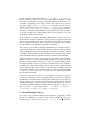
We will briefly explain ASP, a declarative problem solving approach, combining a
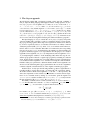
rich yet simple modeling language with high-performance solving capacities. A (normal) logic program over an alphabet A is a finite set of rules of the form a0 ←
a1 , . . . , am , not am+1 , . . . , not an , where ai ∈ A is an atom for 0 ≤ i ≤ n.2 A literal is an atom a or its (default) negation not a. For a rule r, let head(r) = a0 be the
head of r and body(r) = {a1 , . . . , am , not am+1 , . . . , not an } be the body of r. Given
a set B of literals, let B + = {a ∈ A | a ∈ B} and B − = {a ∈ A | not a ∈ B}. A set
X ⊆ A is an answer set of a program P over A, if X is the ⊆-smallest model of the
reduct P X = {head(r) ← body(r)+ | r ∈ P, body(r)− ∩ X = ∅}. An answer set can
also be seen as a Boolean assignment satisfying all conditions induced by program P .
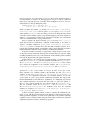
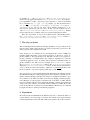
The input language of clingcon extends the one of gringo (cf. [4]) by CP-specific
operators marked with a preceding $ symbol, as detailed in Section 4. After grounding, a propositional program is then composed of regular and constraint atoms, denoted
by A and C, respectively. The set of constraint atoms induces an ordinary constraint
satisfaction problem (CSP) (V, D, C), where V is a set of variables with common domain D, and C is a set of constraints. This CSP is to be addressed by the corresponding
CP solver, in our case gecode. As detailed in [3], the semantics of such constraint logic
programs is defined by appeal to a two-step reduction. For this purpose, we consider a
regular Boolean assignment over A ∪ C (an interpretation) and an assignment of V to
D (for interpreting the variables V in the underlying CSP). In the first step, the constraint logic program is reduced to a regular logic program by evaluating its constraint
atoms. To this end, the constraints in C associated with the program’s constraint atoms
C are evaluated wrt the assignment of V to D. In the second step, the common GelfondLifschitz reduct [5] is performed to determine whether the Boolean assignment is an
answer set of the obtained regular logic program. If this is the case, the two assignments
constitute a (hybrid) constraint answer set of the original constraint logic program.
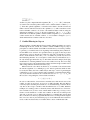
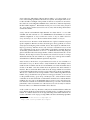
In what follows, we rely upon the following terminology. We use signed literals of
form Ta and Fa to express that an atom a is assigned T or F, respectively. That is,
Ta and Fa stand for the Boolean assignments a 7→ T and a 7→ F, respectively. We
denote the complement of such a literal ` by `. Sometimes we restrict such an assignment A to its constraint atoms by writing A|C . For instance, given the regular atom
‘person(adam)’ and the constraint atom ‘work(adam) $> 4’, we may form the
Boolean assignment {Tperson(adam), Fwork(adam) $> 4}.
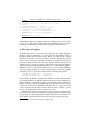
We identify constraint atoms in C with constraints in (V, D, C) via a function γ :
C → C. Provided that each constraint c ∈ C has a complement c ∈ C, like ‘ = ’ =
‘ 6= ’ or ‘ < ’ = ‘ ≥ ’, we can extend γ to signed constraint atoms over C:
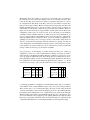
c if ` = Tc
γ(`) =
c if ` = Fc
For instance, we get γ(Fwork(adam) $> 4) = work(adam) ≤ 4, where
work(adam) ∈ V is a constraint variable and (work(adam) ≤ 4) ∈ C is a constraint. An assignment satisfying the last constraint is {work(adam) 7→ 3}.
2
The semantics of choice rules and integrity constraints is given through program transformations. For instance, {a} ← is a shorthand for a ← not a0 plus a0 ← not a.