1
Following [6], we represent Boolean constraints issuing from a logic program under ASP semantics in terms of nogoods [7]. This allows us to view inferences in ASP
as unit propagation on nogoods. A nogood is a set {σ1 , . . . , σm } of signed literals, expressing that any assignment containing σ1 , . . . , σm is unintended. A total assignment
A is a solution for a set ∆ of nogoods if δ 6⊆ A for all δ ∈ ∆. Whenever δ ⊆ A, the
nogood δ is said to be conflicting with A. For instance, given atoms a, b, the total assignment {Ta, Fb} is a solution for the set of nogoods containing {Ta, Tb} and {Fa, Fb}.
Likewise, {Fa, Tb} is another solution. Importantly, nogoods provide us with reasons
explaining why entries must (not) belong to a solution, and lookback techniques can be
used to analyze and recombine inherent reasons for conflicts. We refer the interested
reader to [6] for details on how logic programs are translated into nogoods within ASP.
3
The clingcon Architecture
Although clingcon’s solving components follow the approach of modern SMT solvers
when combining the ASP solver clasp with the CP solver gecode, clingcon furthermore
adheres to the tradition of ASP in supporting a corresponding modeling language by
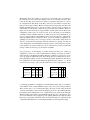
appeal to the ASP grounder gringo. The resulting tripartite architecture is depicted in
Figure 1. Although in the current implementation the theory solver is instantiated with
gringo
clasp
Theory
Language
Theory
Propagator
Theory
Solver
Fig. 1: Architecture of clingcon
the CP solver gecode, the principal design of clingcon along with its interfaces are
conceived in a generic way, aiming at arbitrary theory solvers.
Following the workflow in Figure 1, the first extension concerns the input language of gringo with theory-specific language constructs. Just as with regular atoms, the
grounding capabilities of gringo can be used for dealing with constraint atoms containing first-order variables. The language extensions allow for expressing arithmetic constraints over integer variables. as well as global constraints and optimization statements.
These constraints are treated as atoms and passed to clasp via the standard gringo-clasp
interface, also used in clingo, the monolithic combination of gringo and clasp. Information about these constraints is furthermore directly shared with the theory propagator. In
the new version of clingcon, the theory propagator is implemented as a post propagator,
as furnished by clasp. Theory propagation is done by appeal to the theory solver until
a fixpoint is reached. In doing so, decided constraint atoms are transferred to the theory solver, and conversely constraints whose truth values are determined by the theory
solver are sent back to clasp using a corresponding nogood. Whenever the theory solver
detects a conflict, the theory propagator is in charge of conflict analysis. Apart from reverting the state of the theory solver upon backjumping, this involves the crucial task of