1
port and may later produce a value on an output port. The abstract syntax of
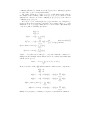
SAFL expressions, e, is as follows (we abbreviate tuples (e1 , . . . , ek ) as ~e and
similarly (x1 , . . . , xk ) as ~x):
– variables: x; constants: c;
– user function calls: f (~e);
– primitive function calls: a(~e)—where a ranges over primitive operators (e.g.
+, -, <=, && etc.);
– conditionals: e1 ? e2 : e3 ; and
– let bindings: let ~x = ~e in e0 end
In order to distinguish distinct call sites we assume that each abstract-syntax
node is labelled with a unique identifier, α, writing f α (e1 , . . . , ek ) to indicate a
call to function f at abstract-syntax node α.
Although functions can call other previously defined functions arbitrarily, the
only form of recursion allowed is tail-recursion. This allows us to statically allocate the storage (e.g. registers and memories) required by a SAFL program [15].
Tail recursive calls are compiled into feedback loops at the circuit level.
SAFL is a call-by-value language. All function-call arguments and let-definiens
are evaluated in parallel. Operations can be sequenced using the let construct
since the language semantics state that all let-declarations must terminate before the let-body is evaluated.
We compile SAFL to hardware in a resource aware manner. That is each
function definition is mapped into a single hardware-level resource; functions
which are called more than once become shared resources. For example, consider
the following SAFL code:
fun mult(x, y, acc) =
if (x=0 or y=0) then acc
else mult(x<<1, y>>1, if y.bit0 then acc+x else acc)
fun square(x) = mult(x, x, 0)
fun cube(x)
= mult(x, mult(x, x, 0), 0)
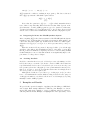
This SAFL specification describes a circuit containing a single shift-add multiplier shared between hardware-blocks to compute squares and cubes. Notice how
in contrast to traditional high-level synthesis (see Section 1.1) the resource aware
interpretation of SAFL specifications explicitly contains allocation and binding
information. (Although not of direct relevance to this paper, in [15] we show
how fold/unfold transformations [3] can be used to explore various allocation
and binding constraints.)
3.1
Translating SAFL to Hardware
As in Relative Scheduling [10] the FLaSH compiler generates logic to explicitly
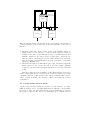
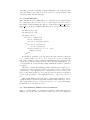
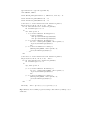
signal the completion of operations. More precisely, each SAFL function definition, f , is compiled into a single resource, Hf , consisting of: