1
Measurement Control
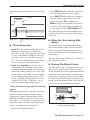
99999999, and the quantization error is worst
case. The best case is when the displayed
value is 10000000. Then the quantization resolution corresponds to ± 0.5 LSD units.
± 1 unit in 99999999 (=1E8)
means 10 times more relative
resolution than ± 1 unit in
10000000 (=1E7), despite the
same number of digits.
+
A gradual increase of the measurement time
reduces the instability in the LSD caused by
the quantization uncertainty. At a specific
measurement time setting, the counter is justified to display one more digit. That one additional digit suddenly gives ten times more display resolution, but not a ten times less
quantization uncertainty. Consequently, a
measurement time that gives just one more
display digit shows more visual uncertainty in
the last digit.
For a stable LSD readout, the maximum measurement time selected should be one that still
gives the required number of digits. Such optimization of the measurement time enables the
total resolution to be equal to the quantization
resolution.
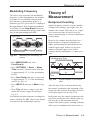
A block is a collection of consecutive measurements, the results of which are stored in
local memory for statistics or plotting purposes (STAT/PLOT menu) or for later transfer to a controller over one of the data communication links (GPIB, USB or
ETHERNET).
Additional controls over start and stop
of measurements
Free-running measurements may be easy to
understand, but measurements can get more
complex.
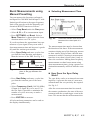
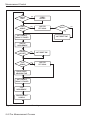
Besides input signal triggering, the start of a
measurement is further controlled by the following elements:
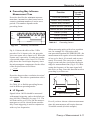
– Manual RESTART, if HOLD is selected.
– GPIB triggering (<GET> or *TRG), if bus
triggering is selected.
– External arming signal, if Start Arming
is selected.
– Expired start arming delay, if Arming
Delay is selected.
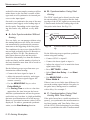
In addition to expired measurement time and
stop signal triggering, the stop of measurement is further controlled by:
Measurement Time and
Rates
– External arming signal triggering, if Stop
The set measurement time decides the length
of a measurement if Frequency or Period
Average is selected.
GPIB triggering is described in the Programming manual.
This is important to know when you want to
make fast measurements, for example when
you are using the statistics features, or when
you are collecting data over the GPIB bus.
The so-called “dead time”, that is the time between the stop of one measurement and the
start of the next one in the course of a block
measurement, can be below 2 ms.
Arming is selected.
Now let’s look deeper into the concept of
arming.
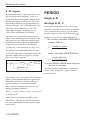
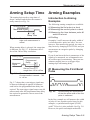
What is Arming?
Arming is a pretrigger condition (“qualifier”)
that must be fulfilled before the counter allows a measurement to start.
Arming can also be used to qualify the stop of
a measurement. This is called “stop arming”
The Measurement Process 5-5