1
1
INTRODUCTION
2
1 Introduction
ACS is the acronym for Alma Common Software. The ALMA Common Software (ACS) “provides a software infrastructure common to all partners and consists of a documented collection
of common patterns in control systems and of components, which implement those patterns.
The heart of ACS is an object model of controlled devices, called Distributed Objects (DOs),
implemented as CORBA network objects.” The ACS will be used in the ALMA project, a 64
antenna millimeter and submillimeter interferometer placed in the Atacama desert in Chile.
Although ACS is oriented towards ALMA, it may be used in other projects where there
are real time control systems and distributed network components. We, at the Observatorio
Astronmico Nacional, have tested the ACS to verify if it may be used in the control system of
the 40m radiotelescope of the OAN.
This report describes our experience installing ACS on a Debian distribution and using it
for the first time. Although there is plenty of information and documentation in the ACS pages
( http://www.eso.org/ gchiozzi/AlmaAcs/) we try to offer here the point of view of a
new comer with no previous knowledge on the technologies used by ACS.
2 Installation on a Debian 3.0 distribution
Debian is the default Linux distribution used in the Observatorio Astronmico Nacional. We
want to keep only one distribution in the observatory to minimize software management complexity. At the time of writing this report the current stable Debian version is 3.0.
ACS is provided for RedHat 7.2 and the installation of ACS on a Debian distribution has
never been performed before. This section describes how to successfully complete such an
installation on a Debian 3.0 host.
ACS installation can be performed on two ways, either using the binary executables and
already compiled libraries or compiling the code. Both approaches are faulty with ACS 2.1
and Debian 3.0. ACS needs the compiler provided by Red Hat 7.2, g++2.96, while Debian
3.0 uses g++2.95. Both g++ versions are binary incompatible and therefore compilation is
unsuccessfull. Debian 3.0 uses g++2.95 because according to GNU the g++2.96 version is a
development version which preceded the stable gcc 3.x versions. Hence it is not advisable to
use it.
Since the release of ACS 3.0 it is also possible to download the tools to generate the ACS
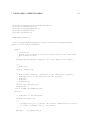
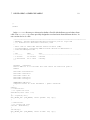
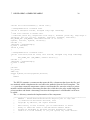
binaries. Below we describe a step by step procedure to generate ACS 3.0 on a Debian 3.0
distribution:
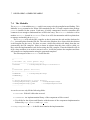
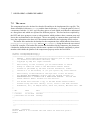
1. Create an account “almamgr”.
2. Create directory downloads in almamgr
cd $HOME
mkdir downloads
3. Download the following files and place them in $HOME/downloads: