1
W. Eliot Kimber
• Preserving Process: Hyperlink-Based Workflow
Representation
hyperlink elements. In any case, it was never my intent that a link-based workflow would be a
full topic map.
Note that if concrete workflows are managed as literal XML documents (that is, as character
strings conforming to the XML specification), then every time a managed object moves to a new
state, a new version of the workflow document must be produced. If these versions are managed
in a version management system, it automatically creates a record of the actions performed
through the workflow. If the concrete workflows are managed as "in-memory" documents (e.g.,
DOMs that are dynamically mutated as managed objects move to new states), then there is no
necessary saving of historical state, but no barrier to doing it either.
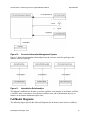
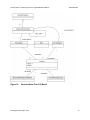
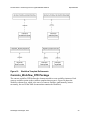
The XML design is organized into two distinct packages of element types that both import
element types from a package of common element types. The Workflow_Template_DTD
package defines the element types needed to define abstract workflows. The
Concrete_Workflow_DTD package defines the elements needed to define concrete workflow
documents. The Common_Workflow_Elements_DTD package defines element types that have
identical semantics and constraints in both packages. Formally, these DTD-defining packages are
implementation refinements of the abstract and concrete workflow data models.
Note that the DTD packages do not impose any particular storage organization constraints on the
workflows--it would be possible to have a single XML document that contained both abstract
and concrete workflows. However, normal data management practice would make it most
convenient to separate abstract and concrete workflows into separate physical documents. It
might also make sense to make each state in a concrete workflow into a separate document so
that each state can be individually versioned without affecting any other states. In any case, the
storage organization of the elements does not have any semantic significance.
When using the HyTime standard for hyperlinking semantics, a concrete workflow forms the hub
of a hyperdocument that has as its BOS members the concrete workflow document, the
governing abstract workflow document, an all managed objects (assuming that management is
done at the entity level). When using XLink, one could define a link group that served to
enumerate the documents participating in the workflow.
These DTDs can be used as the local DTDs for documents, as SGML architectures, or as name
spaces. If the DTDs are used as the local DTDs for documents, then concrete workflows and
workflow templates must be in separate documents. If architectures or name spaces are used then
concrete and abstract workflows can coexist in the same document. The DTDs as defined here do
not define any elements for holding documentation or implementation-specific metadata. Such
extensions can be provided by creating derived DTDs or architectures that use these DTDs as
their base architectures or by using additional hyperlinks to annotate the workflow documents.
The Abstract Hyperlink Data Model
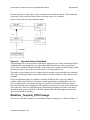
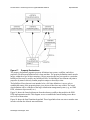
The XLink and HyTime standards both reflect the same high-level data model of what a
hyperlink is. This model is explicit in the HyTime standard and implicit in the XLink standard.
The key aspect of this model is the distinction between hyperlink anchors and the members of
those anchors. In casual discussion of hyperlinks we usually use the term "anchor" to mean both
the anchor objects and the anchor members without making a clear distinction. However, for the
purposes of talking about the details of activity policies and traversal it is necessary to make a
clear distinction between anchors and anchor members. In particular, when you do this it
Knowledge Technologies, 2001
15