1
Introduction: Theory and Background
We are very different from each other on many levels, but but not as much as you might think
on the genetic level. In fact, a large portion of the genetic makeup from one person to the next
may differ by as little as 0.1%! Our genome consists of over 3 billion base pairs, and that 0.1%
still makes a big difference. The differences between genomes underlies the theory behind DNA
profiling. There are a number of specific regions on our genomes that reliably vary between
individuals. For this experiment, the focus will be on a “Variable Number Tandem Repeat
(NVTR)” region. Throughout the genome there are segments that feature small repeating
sequences of DNA. A repeated sequence is generally the same between individuals, but the
number of times it repeats can vary. Analyze enough of the VNTR segments, and a a genetic
“fingerprint” for an individual can be generated.
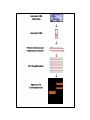
In the EduPrimer VNTR DNA Profiling kit, we focus on the Penta E “microsatellite” region, a
VNTR region with a repeating sequence 2-5 base pairs long, which features a sequence of
“AAAGA” that can repeat anywhere from 5 to 26 times. This means that when a region flanking
and including this repeating sequence is amplified by PCR using our primers the region will be
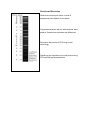
between 246 – 351 base pairs long. Each individual will have two bands on the final gel, one
inherited from each of their parents, apart from individuals who might have identical repeating
numbered sequences from both parents.
For a single VNTR site there can be a wide degree of variation and it is unlikely that any two
non-related persons will share the same band pattern. In a real forensic analysis using DNA
profiling or fingerprinting, many variable regions are used to accurately distinguish one
individual.