1
8/9/2015
Safety Code for the construction industry
(14.1)
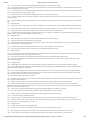
“pump jack scaffold” means a mast-climbing work platform that moves between two masts with the help of jacks;
(14.2) “mast-climbing work platform” means scaffolding constituted of a work platform that moves up and down between two or several masts with the help of a hoisting
system and equipped with an anchoring system;
(14.3) “winch scaffolding” means a mast-climbing work platform whose masts are linked by braces or counter braces supporting a work platform that moves with the help
of a hoisting device constituted of winches, pulleys and cables;
(15)
“scaffold shoring” means an assembly of tubular scaffolding frames used for the shoring of concrete formwork;
(15.01) “motorized scaffolding” means a mast-climbing work platform constituted of a hoisting system made up of an electric, pneumatic or hydraulic motor or a natural
gas or gasoline engine;
(15.1)
winch;
“suspended scaffolding” means a platform suspended by one or more cables fixed to an anchoring point and moved vertically by means of a manual or motorized
(16)
(paragraph revok ed);
(17)
“electrical power company” means a person, firm, company, cooperative society or municipality operating an electric energy transportation or distribution network;
(17.1)
(18)
“confined space” means a space which is not designed to be occupied by a human being, in particular a tank, silo, vat, caisson, shoring pile, stack or manhole;
“excavation” means a piece of land dug out to a depth of at least 1.2 m where the width of the base exceeds the depth;
(18.1) “explosives” means any substance fabricated, manufactured or used to produce an explosion or a detonation, such as gunpowder, blasting powder, dynamite, an
explosive in solution, aqueous gelatin, a blasting agent or a blasting accessory;
(19)
(paragraph revok ed);
(20)
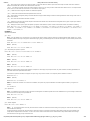
“manufacturer” means means the maker or his agent or where manufacture is done on the site, the employer;
(21)
“safety factor” means the ratio of the ultimate load to the working load;
(21.1) “respirable asbestos fibre” means asbestos fibre having a diameter of less than 3 µm and a ratio of length to diameter of more than 3:1. Only fibres longer than
5 µm are taken into account for measurement purposes;
(21.2)
“high-efficiency filter” means a filter capable of filtering particles of 0.3 µm in size at an efficiency rate of at least 99.97%;
(22)
“face” means the most advanced work point in a given direction in an underground excavation at a given level;
(23)
(paragraph revok ed);
(23.0) “free fall distance” means the vertical distance measured from the beginning of a fall, from the harness D-ring to which the fall arrest connecting device is attached,
to the point where the fall arrest system begins to apply force to stop the fall;
(24)
“jumbo” means a hammer-carrying head designed for drilling at the face without having to repeatedly disassemble drilling machines;
(24.0) “fall arrest connecting device” means all equipment, such as a lanyard, energy absorber, snap hook, connector, life line or rope grab, used to secure a safety
harness to an anchorage system;
(24.1)
(paragraph revok ed);
(24.2)
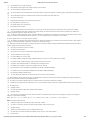
“friable material” means material that can be crumbled, pulverized or powdered by hand pressure when dry or that is crumbled, pulverized or powdered;
(25) “non-combustible material” means material that complies with CAN4-S114, Standard Method of Test for Determination of Non-Combustibility in Building Materials,
applicable at the time of manufacture of the equipment;
(25.01)
“dike” means a sandbag barricade, an earth mound or the equivalent located less than 50 cm from the depot and whose height is at least equal to the depot;
(25.1) “protective wall” means a partition made of plywood at least 9 mm thick or made of another rigid material of an equivalent or greater resistance, that is at least
1.8 m high and that is installed at not more than 100 mm above the ground;
(26)
“NFPA” means the National Fire Protection Association;
(27) “two-blocking” means a situation where the hook block, the hoisting cable counterweight or other accessories attached to the hoisting cable come into contact with
the tip of the boom or with the tip of the jib;
(28)
“blasting mat” means a covering used to offer protection against stones or other objects that may be projected as a result of firing explosives;
(29) “low velocity explosive actuated tool” means any tool designed so that when it is used with the maximum explosive charge permitted by the manufacturer's
specifications, it imparts to the fastener a speed of not more than 91.4 m per second and transmits to it kinetic energy of not more than 33 joules measured at a distance
between 1.99 to 2.01 m from the mouth of the tool;
(29.1)
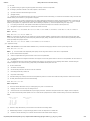
“asbestos dust” means airborne asbestos particles or deposited asbestos particles liable to become airborne in the work area;
(30)
“shaft” means a passage dug underground whose longitudinal axis makes an angle greater than 20º with the horizontal;
(31)
“scaling” means an action provoking the fall of rocks which tend to become separated from a partition wall or a vault;
(31.01)
(31.1)
“SAE” means the Society of Automotive Engineers;
“boatswain's chair” means a seat designed for a worker, supported by slings or by a structure and suspended from a cable fixed to an anchoring point;
(32) “hazard signs” means a yellow, orange or red rigid strip, such as a trestle, or flexible strip, at least 70 mm wide and installed, according to the configuration of the
land or of the structure, at a height varying between 0.7 m and 1.2 m
(33)
(33.1)
(paragraph revok ed);
“flushing toilet” means a toilet having the following features
(a)
the bowl has a hatch or a siphon which separates it physically and visually from the drain pipe or the processing tank;
(b)
waste is purged from the bowl toward the sewer system or into the processing tank by means of a device causing a flow of water or chemicals;
(33.2)
“chemical toilet” means a toilet without a bowl in which waste falls directly into a tank containing a chemical product to process the waste;
http://www2.publicationsduquebec.gouv.qc.ca/dynamicSearch/telecharge.php?type=3&file=/S_2_1/S2_1R4_A.HTM
2/87