1
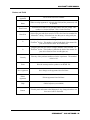
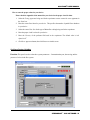
OSCIFLOW® USER MANUAL Getting Started Introduction Fluid-induced shear stress occurs in every tissue in the body as a result of interstitial fluid movement. Tissue deformation by compression, tension or shear forces results in the movement of interstitial fluid around cells. Fluid movement acts as a transport vehicle for ions, proteins, carbohydrates and other molecules capable of movement within the matrix. As the fluid moves past cell membranes, a shear stress, , is generated. If one assumes that laminar flow occurs through a parallel-plate flow chamber, fluid-induced shear stress values can be determined with the following formula: = 6Q/bh2, where is the shear stress in dyne/cm2, is the viscosity of the fluid in dyne.s/cm2, Q is the flow rate in ml/s, b is the width of the flow channel in cm, and h is the height of the flow channel in cm. Shear stress in the vascular system may vary from less than 1, to more than 35 dyne/cm2. Fluid shear stress in canaliculi of bone may vary from 1 to 20 dyne/cm2, while in cartilage it may be in the range of 1 to 5 dyne/cm2. The OsciFlow® is a software-controlled valve-operated device designed to provide oscillatory or start-stop flow patterns to cells cultured in the Streamer, FlexFlow or other perfusion devices. Both the Streamer and FlexFlow are parallel-plate flow systems designed to apply fluid-induced shear stress to cells grown in a monolayer. The OsciFlow® regulates flow direction by choreographing the closing and opening a collection of pinch valves. This carefully timed action serves to constrict or release tubing thus directing the fluid flow through the desired channels. The OsciFlow® device is able to regulate flow both in an oscillatory (flow reversal) manner and in a pulsatile (square wave) mode, where the flow is stopped and then restarted after a designated period of time. Software control through StreamSoft software allows the user to regulate frequency of oscillation or pulsatile patterns, as well as shear stress levels applied to cells. Individual protocols can be designed for flow experiments. The frequency of oscillation or pulsation is specified by programming seconds ON and seconds OFF in the software. An advantage that the OsciFlow® has over other flow reversal techniques is that it overcomes inertial lag. Other techniques for flow reversal rely on a change of pump – motor rotation. With this strategy, the inherent inertial effects associated with the deceleration and acceleration creates an unavoidable response lag time. As the OsciFlow® does not require a pump – motor to change directions, near instantaneous flow reversal can be achieved with less wear and tear on pumps and motors. STREAMSOFT V4.2 SOFTWARE 3