1
CONSUMER’S DIGEST OF CAI AUG/ SEP’ 12
UV Water purifiers are also good for
the following reasons:
1. UV water purifier disinfects
water much faster in most cases
(within a few minutes) than
other chemical water purification
systems.
GUIDE TO SELECTING THE RIGHT TYPE OF
WATER PURIFIER FOR YOUR NEEDS
Water Purifiers can be divided into
2 categories:
1. Electric
The two types of electric water
purifiers are:
• Reverse Osmosis Purification
system(RO)- In this system water
is pumped through a semipermeable membrane. The
semi-permeable membrane
allows only the water to pass
through and not contaminates
or the impurities. Contaminate
and the impurities are flushed
down the drain.
Thus making hard water pure, fresh,
safe and drinkable for those living
in coastal areas.
2. RO water purifiers do not use any
chemicals such as chlorine or iodine
and do not require filter changes or
cleaning.
3. RO water purification system
removes even the smaller particles
from the drinking water. Most of
these particles are smaller than the
eye can see.
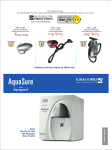
Indian markets are flooded with RO
water purifiers ranging from 10,000
to 45000 Rupees.
UV Radiations
RO water purifiers are by far the
market leaders in water purification
system for the following reasons:
•
In this purification system the
first is a filter that removes
impurities.
1. These systems do not only get
rid of disease bearing bacteria and
viruses but also pollutants such as
cancerous dyes and insecticides.
•
And then high-energy UV rays,
generated from a UV lamp
fitted inside the water purifier
to eliminate micro-organisms.
52
2. UV water purifier does not
alter the chemical composition of
water.
3. The taste, pH, odour and water
properties remain the same even
after purification in a UV water
purifier.
4. UV Water purification system is
99.9 percent effective in removing
the harmful microbes.
A UV water filter although
99.9% effective but still may not
be effective if water is highly
contaminated or turbid with
organic materials, virus, bacteria
and sediment that could hide
from UV light.
2. Non-electric The two type of
non-electric water purifiers
are:
•
Tap attachment - These filters
are fixed to the mouth of taps.
These purifiers are portable
and need no electricity. In this
system water is passed through
a carbon candle filter or a
membrane fitted inside.
Shortcomings
(a) Do not remove metals such as
lead and copper.
(b) Also do not remove nitrate,
bacteria or dissolved minerals.
(c) The filter candle usually has a
resin filter that needs to be changed
every month.
Not suitable if the water contains chemical
impurities
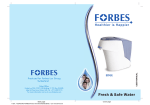
3. Storage Type- These types of
water purifiers doesn’t need
electricity or plumbing. This
system is a combination of
sediment filters and activated
carbon filters. Cartridges fitted
inside are usually made of
polypropylene fibre. These
cartridges hold back particles
to pass through.
(a) Very helpful in places facing
water shortage.
(b) No electricity and running water
required.
(c) Affordable-The price ranges
from 1000 to 3000 Rupees.
(d) Many options available in the
market.
53