1
9.
DEEP ARRAY WAKE MODEL (ENTERPRISE VERSION ONLY)
The Deep Array Wake Model (DAWM) within Openwind is a modification which can be applied to any
other wake model.
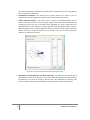
The default configuration of this modification involves the modelling of each individual turbine as a
roughness element the width of the turbine rotor. In fact, the two IBLs resulting from such a distinct patch
of roughness are initialized in place at the upper and lower edges of the rotor plane and extending in a
square of side one rotor diameter centred on the turbine hub. This IBL pair is then allowed to propagate
downwind, affecting the wind speed at each downwind turbine. This effect is modelled separately from
standard wake models such as Park or the Eddy-Viscosity model and is combined by taking the maximum
of the roughness effect and the standard wake effect.
The DAWM Eddy-Viscosity model is the AWST default model for all energy assessments regardless of how
many turbines are being modelled. The deep array effect emerges gradually and naturally as more rows of
turbines are added.
The DAWM EV model has been tuned to data from Horns Rev and Nysted for offshore operation and to
data from three separate sites in the Midwestern US for use inland.
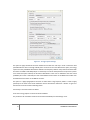
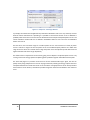
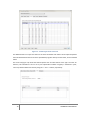
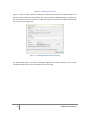
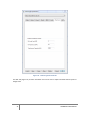
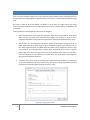
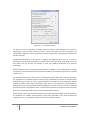
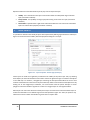
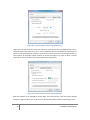
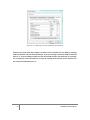
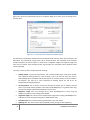
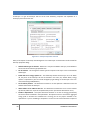
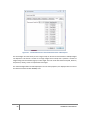
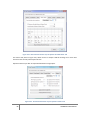
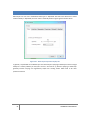
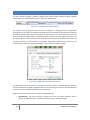
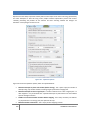
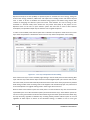
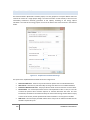
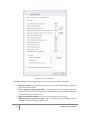
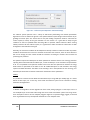
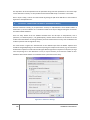
For this purpose, a drop-down option has been provided to enable easy setup for either inland or offshore
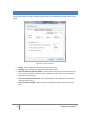
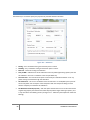
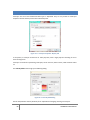
wind farms (see Figure 9.1). Users can configure drop-downs as "Offshore" or "Inland"—either as presets
or "Custom"—to allow direct editing of the turbine and background roughness values.
For a fuller description of the theoretical basis and validation of this model, please see
http://www.awsOpenwind.org/downloads/documentation/DAWM_WhitePaper.pdf
28
OPENWIND USER MANUAL